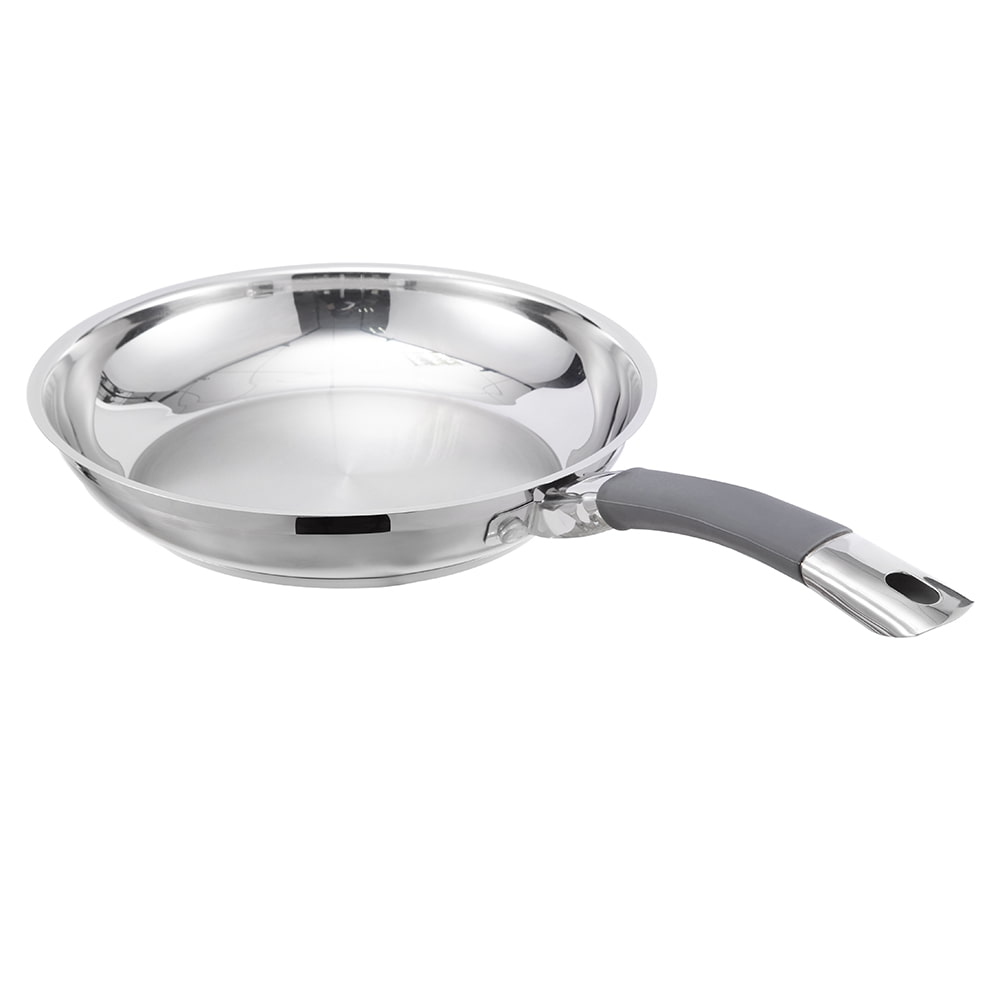
The choice of non‑stick surface technology in cookware, particularly for products such as the aluminum frying pan with granite non-stick surface without lid, plays a critical role in defining performance, longevity, and system integration within commercial and industrial kitchens. From a systems engineering perspective, non-stick coatings are not just material layers; they constitute an integrated subsystem within the cookware assembly that impacts heat transfer efficiency, chemical resistance, mechanical durability, and user safety compliance.
Over the past decade, granite, ceramic, and PTFE coatings have emerged as the predominant technologies in non-stick cookware. While all three share the goal of reducing food adhesion and facilitating cleaning, their material properties, manufacturing processes, and operational behaviors differ significantly.
Granite coatings are typically composite coatings based on resin-bound mineral particles, often reinforced with silica, granite dust, or ceramic micro-grains. They are applied over a pre-treated aluminum substrate and then cured under controlled heat conditions to achieve a dense, textured, and hard surface. Key material features include:
Ceramic coatings are inorganic, silica-based layers typically applied via sol-gel or thermal spraying methods. Core characteristics include:
PTFE (Polytetrafluoroethylene) coatings are polymer-based fluorocarbon layers widely known for their:
| Property | Granite Coating | Ceramic Coating | PTFE Coating |
|---|---|---|---|
| Base Material | Resin + mineral particles | Silica-based inorganic layer | Fluoropolymer |
| Microstructure | Textured, composite | Smooth, glass-like | Smooth, polymer film |
| Layering | Multi-layer (primer + base + top) | Single/multi-layer depending on method | Usually multi-layer |
| Polymer Content | Partial (resin/fluoropolymer) | None | High (100% polymer) |
| Environmental Compliance | Often PFAS-free or low PFAS | PFAS-free | May contain PFAS |
| Typical Thickness | 30–60 µm | 10–50 µm | 20–100 µm |
The thermal behavior of non-stick coatings directly affects cooking efficiency, uniformity, and energy consumption. For aluminum substrates, the coating interface dictates the rate of heat transfer.
Granite coatings, due to their composite structure, present moderate thermal conductivity. The micro-textured surface slightly increases heat retention at the interface, which can improve surface browning uniformity but may marginally reduce rapid heat response.
Ceramic coatings are thermally stable at high temperatures (>450°C) but are less conductive than polymer composites, which can create temperature gradients across the cooking surface.
PTFE has low thermal conductivity, which can lead to faster degradation if exposed to extreme heat (>260°C).
| Parameter | Granite Coating | Ceramic Coating | PTFE Coating |
|---|---|---|---|
| Thermal Conductivity (W/m·K) | Medium (~0.5–1.2) | Low (~0.3–0.8) | Very Low (~0.25–0.5) |
| Maximum Safe Temperature (°C) | 400–450 | 450–500 | 260–280 |
| Heat Distribution Uniformity | Medium-High | Medium | Medium |
| Surface Browning Efficiency | Medium-High | Medium | Medium-Low |
Perfect! Let’s continue with the next sections of the article, maintaining the same technical, MPS Scholar–style, with detailed analysis, tables, and B2B/system engineering perspective.
Non-stick coatings must withstand mechanical stresses during routine use, including scraping, stirring, and stacking. For engineers and technical procurement teams, understanding abrasion resistance, scratch tolerance, and adhesion to the aluminum substrate is critical.
Granite coatings offer high abrasion resistance due to embedded mineral particles, which act as microscopic reinforcement. Key performance aspects:
Consideration: Excessive force or sharp metallic tools can eventually damage the resin matrix. Preventive maintenance and operational guidelines improve lifespan.
Ceramic coatings are hard and brittle, providing excellent scratch resistance against soft utensils but are susceptible to chipping under impact or thermal stress.
PTFE is soft and flexible, giving excellent initial non-stick behavior but lower scratch and abrasion resistance.
| Property | Granite Coating | Ceramic Coating | PTFE Coating |
|---|---|---|---|
| Scratch Resistance | High | Medium-High | Low-Medium |
| Abrasion Resistance | High | Medium | Low |
| Adhesion to Aluminum Substrate | High | Medium | Medium-High |
| Tolerance to Metal Utensils | Moderate | Low-Moderate | Low |
| Lifespan under Normal Use | Medium-High | Medium | Medium-Low |
Regulatory compliance and chemical stability are increasingly important factors for commercial buyers, especially in B2B procurement for institutional kitchens.
| Parameter | Granite Coating | Ceramic Coating | PTFE Coating |
|---|---|---|---|
| PFAS Content | Low/None | None | May contain PFAS |
| Acid/Alkali Resistance | High | High | High |
| Heat Stability (Chemical) | Up to 450°C | Up to 500°C | Up to 260°C |
| Regulatory Compliance Potential | High | Very High | Moderate |
The application and curing process determines coating adhesion, uniformity, and performance. For engineers, understanding these processes is vital for procurement evaluation, quality control, and lifecycle cost optimization.
Engineering notes: Layer thickness uniformity is critical to prevent thermal hot spots and peeling.
Engineering notes: Coating thickness control and substrate pre-treatment are essential to prevent cracking.
Engineering notes: Over-baking can degrade PTFE properties; under-baking reduces adhesion.
From a systems engineering perspective, coating performance must be evaluated over the full lifecycle.
| Parameter | Granite Coating | Ceramic Coating | PTFE Coating |
|---|---|---|---|
| Routine Cleaning Tools | Non-abrasive, gentle | Non-abrasive | Non-abrasive |
| Metal Utensil Tolerance | Limited | Low | Very Low |
| Lifecycle in Commercial Use | 2–4 years | 1.5–3 years | 1–2 years |
| Maintenance Requirements | Moderate | High | High |
From a procurement and system perspective, engineers and technical managers should evaluate:
| Criteria | Granite Coating | Ceramic Coating | PTFE Coating |
|---|---|---|---|
| Performance Uniformity | Medium-High | Medium | Medium-Low |
| Mechanical Durability | High | Medium | Low-Medium |
| Thermal Tolerance | Medium-High | High | Medium |
| Chemical & Safety Compliance | High | Very High | Moderate |
| Lifecycle / Maintenance | Moderate | High | High |
| B2B System Integration Fit | Good | Moderate-High | Low-Moderate |
The comparison of granite, ceramic, and PTFE non-stick surfaces demonstrates clear trade-offs in material science, mechanical resilience, thermal behavior, and system-level performance:
For aluminum frying pans with granite non-stick surface without lid, a systems engineering approach ensures optimized integration with kitchen processes, utensil usage, and lifecycle planning, providing a robust solution for technical buyers and procurement teams.
What is the primary difference between granite and ceramic coatings?
Granite is a resin-mineral composite with a textured surface; ceramic is inorganic, smooth, and brittle.
Can granite coatings handle metal utensils?
Limited tolerance is possible, but prolonged use with metal may reduce lifespan.
Which coating type has the highest thermal resistance?
Ceramic coatings withstand temperatures up to 500°C, superior to granite and PTFE.
Are granite coatings PFAS-free?
Many modern formulations are PFAS-free or low-PFAS for regulatory compliance.
What is the expected commercial lifecycle of granite-coated pans?
Typically, 2–4 years under heavy usage.
Do ceramic coatings require special cleaning methods?
Yes, non-abrasive cleaning and careful stacking prevent micro-cracks.
Is PTFE suitable for high-temperature cooking?
No, PTFE decomposes above ~260°C, limiting its high-heat applications.
How does coating thickness affect performance?
Uniform thickness improves adhesion, heat transfer, and mechanical durability.
Can granite-coated pans be induction compatible?
Yes, provided the aluminum substrate has proper magnetic base integration.
Which coating is most suitable for B2B institutional kitchens?
Granite coatings often provide the best balance of durability and compliance.
How does surface texture affect cooking?
Textured surfaces influence browning, release, and oil distribution.
Are there environmental advantages to ceramic coatings?
Yes, they are fully inorganic and PFAS-free, reducing environmental impact.
How often should granite-coated pans be replaced in high-use operations?
Approximately every 2–4 years, depending on handling and maintenance.
Does PTFE or ceramic require more careful lifecycle management?
Both require careful monitoring, but PTFE is more sensitive to overheating and scratching.
What procurement factors are critical when selecting non-stick surfaces?
Total cost of ownership, compliance, thermal/mechanical performance, and lifecycle reliability.
 No. 1, Jingwei Road, Yangcheng Lake Town, Xiangcheng District, Suzhou City, China
 [email protected]
  +86-13913553688
Copyright © Suzhou Jiayi Stainless Steel Products Co., Ltd.
 Privacy
Wholesale Aluminum/ Stainless Steel Pan and Pot Manufacturers
Privacy
Wholesale Aluminum/ Stainless Steel Pan and Pot Manufacturers

 search
 中文简体
中文简体 English
 русский
 Français
 Español
 日本語
日本語
-4.jpg "20X4.5CM white medicinal stone coating Aluminum frying pan DB-2045B")
-1.jpg "20X4.5CM black medicinal stone coating Aluminum frying pan DB-2045H")
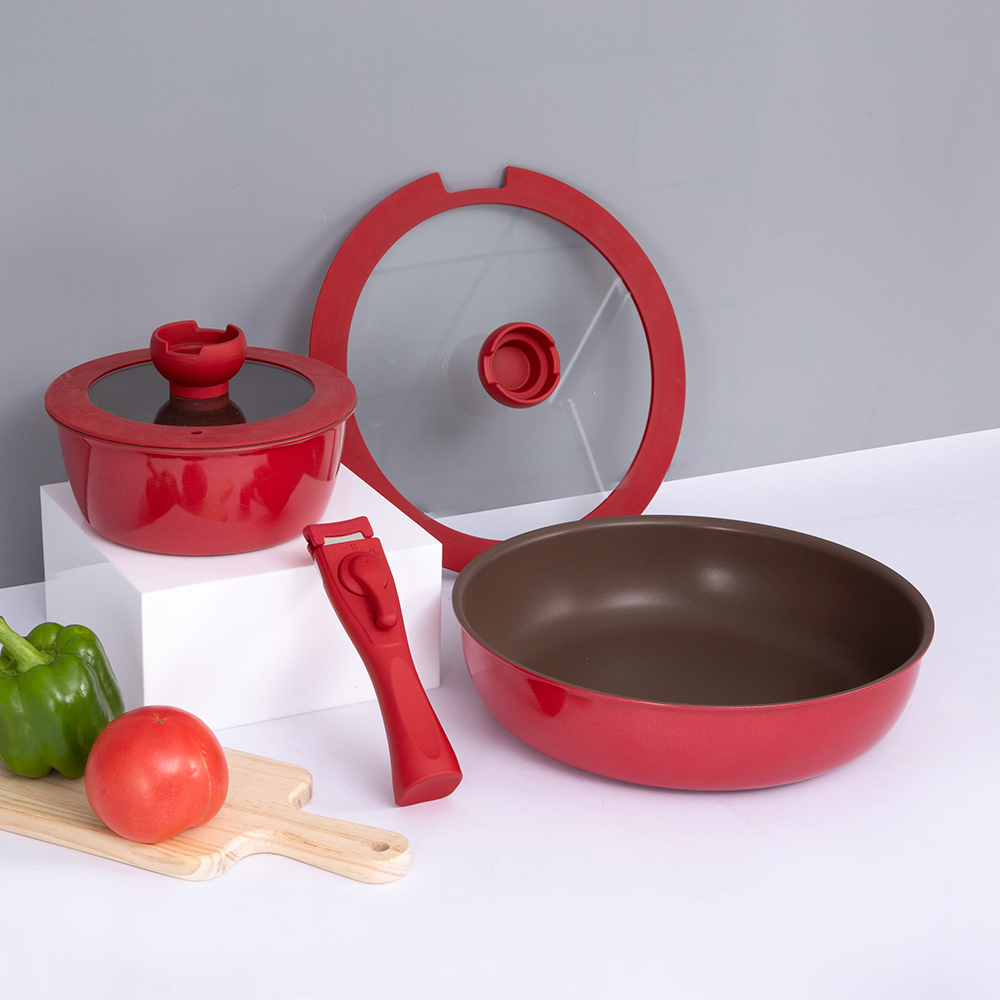
-3.jpg "24X5CM black medicinal stone coating Aluminum frying pan with glass lid DB-2405H")
-5.jpg "28X5.5CM black medicinal stone coating Aluminum frying pan with glass lid DB-2855H")
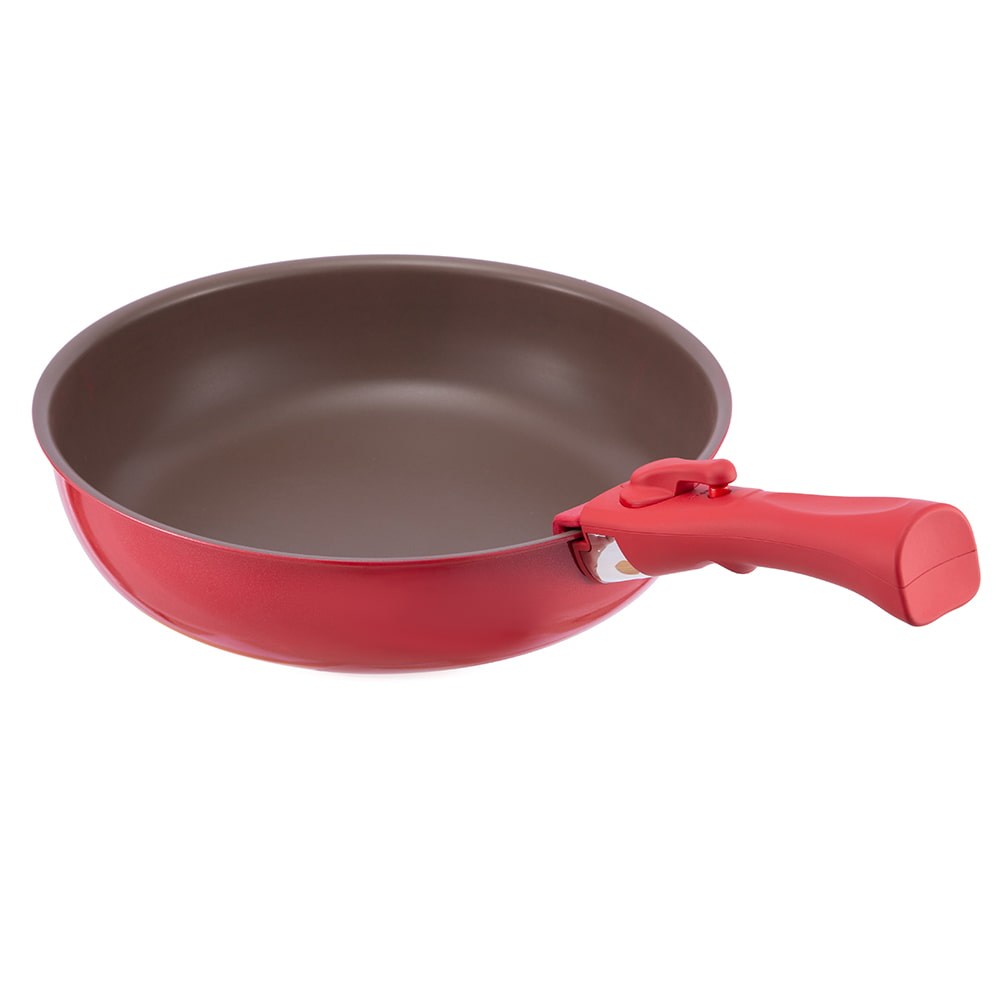
-3.jpg "24X5CM white medicinal stone coating Aluminum frying pan with glass lid DB-2405B")
-9.jpg "20X4.3cm Olive Green Food Safety Coated Stainless Steel 304 Frying Pan JY-2043L")
-3.jpg "20*4.3CM Single long handle uncovered coated frying pan JY-2043NP")
-14.jpg "24X4.5cm Olive Green Food Safety Coated Stainless Steel 304 Frying Pan JY-2445L")