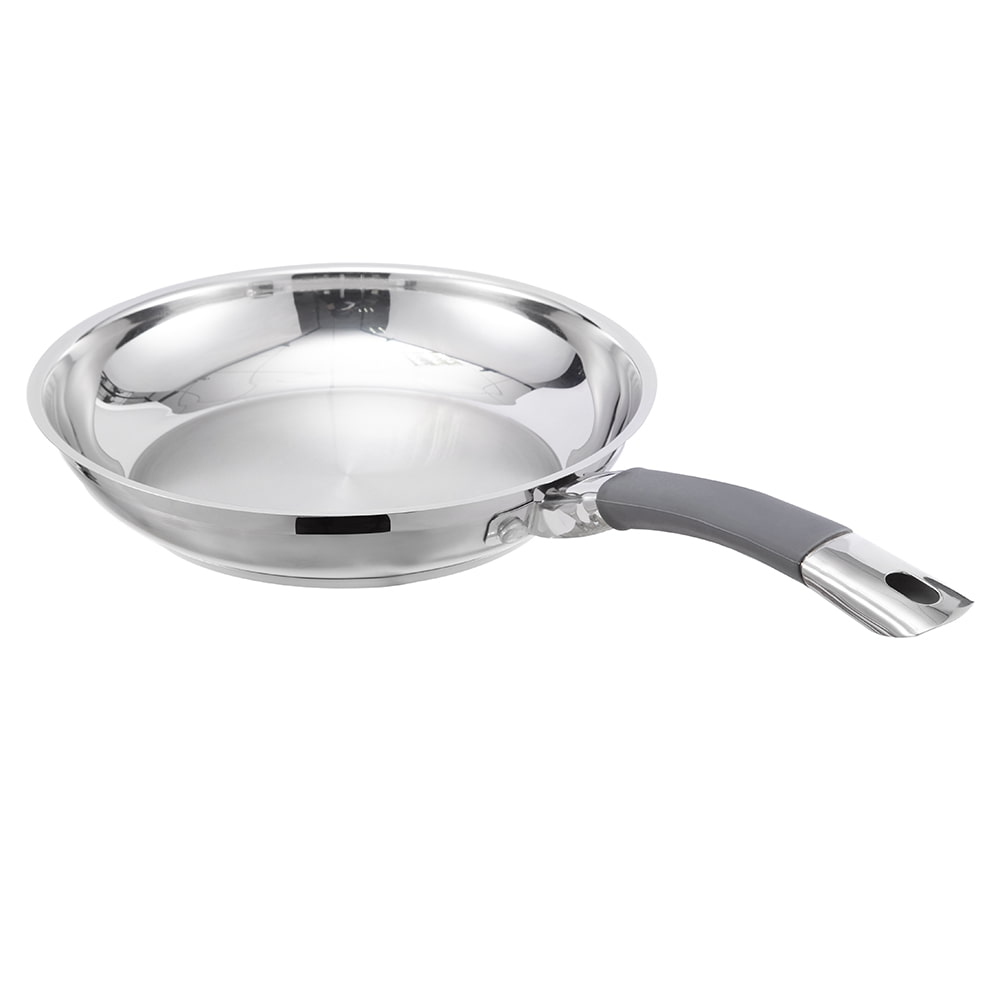
Over the past decade, the adoption of induction cooking systems has accelerated beyond residential adoption into institutional, commercial, and industrial food preparation environments. Induction cooking, by virtue of its electrical control, reduced waste heat, and rapid response characteristics, presents benefits that align with performance expectations in high‑throughput applications.
As induction cooktops proliferate, cookware platforms — including the granite coated aluminum cooking pan without lid — must meet induction readiness specifications to be interoperable across systems. While traditional cookware was designed primarily for gas or resistive electric stovetops, induction presents distinct engineering requirements that impose constraints on material selection, geometry, and manufacturing process controls.
Before addressing cookware adaptations, it is necessary to summarize the underlying physics and system architecture of induction cooking systems.
Induction cooking uses alternating magnetic fields to induce electrical currents in the cookware base. These currents — called eddy currents — produce resistive heating within the cookware itself. Unlike traditional conductive heat transfer from an external flame or heating element, induction inherently depends on electromagnetic coupling between the cooktop and cookware base.
Key technical implications include:
From a systems engineering perspective, induction readiness entails satisfying multiple criteria:
These criteria are interdependent systems variables that directly influence the performance envelope of an induction‑ready granite coated aluminum cooking pan without lid.
The transition toward induction readiness introduces a composite material architecture involving both aluminum substrates and additional ferromagnetic elements.
Aluminum is widely selected in cookware for its:
However, aluminum in its native state lacks sufficiently high magnetic permeability to induce currents effectively under induction fields. This necessitates secondary material systems integrated at the cookware base.
To overcome the aforementioned limitation, manufacturers utilize one of the following approaches:
Each method involves trade‑offs in thermal conduction, mechanical integrity, and manufacturing complexity.
| Method | Magnetic Permeability | Thermal Conduction | Manufacturing Complexity | Cost Implication |
|---|---|---|---|---|
| Bonded Ferromagnetic Plate | High | Moderate | Moderate | Mid |
| Encapsulated Inserts | Moderate | Variable | High | Higher |
| Powder Metallurgy Bonding | Very High | High | Very High | Highest |
Key Observations:
Separately, the granite coating applied to cookware surfaces — including the granite coated aluminum cooking pan without lid — serves primarily for:
These coatings are typically multi‑layer polymer or inorganic composites designed to improve surface durability. Importantly, the coating does not contribute to magnetic induction and therefore must be engineered with awareness of the induction heating substrate below.
Thus, the system becomes a layered stack:
This stack requires careful materials engineering to ensure that each layer’s physical properties support the overall objectives of induction compatibility.
Induction systems impose geometric constraints that influence cookware performance.
The induction cooktop and cookware form an electromagnetic system that performs best when the cookware base:
Non‑uniform surfaces can generate secondary losses, resulting in uneven heating or localized hot spots within the granite coated aluminum cooking pan without lid.
Induction heating efficiency correlates with how eddy currents distribute through the base material. Excessively thick ferromagnetic layers can:
Conversely, excessively thin layers may not sustain efficient coupling. A balanced design is necessary to deliver predictable performance, particularly in environments where precise thermal control is critical.
Edge design influences heat spreading within the cookware. From a thermal systems viewpoint, features such as beveled edges or radii transitions improve heat distribution, which becomes especially relevant in granite coated aluminum cooking pan without lid where thermal gradients can affect coating integrity over long cycles.
Producing a granite coated aluminum cooking pan without lid with induction compatibility involves multi-layer assembly processes, which introduce several engineering challenges:
Layer Bonding Integrity:
Each layer (magnetic base, aluminum core, granite coating) must maintain strong mechanical adhesion to withstand:
Bond failures can lead to delamination, uneven heat transfer, or coating cracking.
Flatness Control:
During stamping, rolling, or forging of aluminum substrates, warpage can occur. Engineers must:
to meet induction cooktop interface specifications.
Coating Application Consistency:
Granite coatings are applied via spray, dipping, or roller techniques, often followed by curing. Uniform coating thickness is essential to:
Variations of ±0.05 mm in coating thickness can alter heat transfer and surface durability.
From a system engineering perspective, manufacturing must be complemented with advanced process monitoring:
These practices reduce failure rates and ensure that the cookware performs reliably across multiple induction cooktop systems.
The integration of magnetic layers, aluminum substrate, and granite coating creates a complex thermal system. Engineers focus on:
Induction-compatible cookware enables direct heating of the pan, reducing energy loss to surrounding air. From a systems viewpoint:
| Parameter | Conventional Aluminum Pan | Aluminum + Magnetic Base | Aluminum + Magnetic Base + Granite Coating |
|---|---|---|---|
| Time to Boil 1L Water | Moderate | Faster | Slightly Slower (due to coating) |
| Energy Efficiency | ~65% | ~80% | ~78% |
| Heat Distribution Uniformity | Moderate | High | High |
| Coating Durability | N/A | N/A | High |
Observation: Proper material integration ensures induction readiness without compromising the durability and functional properties of granite-coated surfaces.
Repeated induction cycles generate thermal expansion stresses between layers:
Granite coatings are valued for abrasion resistance:
Induction-compatible cookware also incorporates safety considerations:
From a system integration and procurement perspective, the shift toward induction compatibility offers measurable benefits:
| Aspect | Gas/Electric-Only Pan | Induction-Compatible Granite-Coated Pan |
|---|---|---|
| Energy Efficiency | Moderate | High |
| Temperature Control | Delayed response | Rapid, precise |
| Safety | Open flame hazards | Reduced external heat |
| Lifecycle | 5–7 years typical | 7–10 years (with coating integrity) |
| Interoperability | Limited | Broad across induction systems |
Engineering Insight: Adoption of induction-compatible cookware reduces operational energy costs, enhances thermal control precision, and ensures multi-platform compatibility in commercial and industrial kitchens.
To achieve system-level performance:
These steps allow engineers to design granite coated aluminum cooking pan without lid systems that reliably function across diverse induction platforms.
The industry trend toward induction compatibility in granite-coated cookware is driven by systemic requirements across energy efficiency, thermal performance, safety, and lifecycle considerations. From a materials engineering perspective, the combination of aluminum substrates, ferromagnetic base layers, and durable granite coatings creates a multi-layered system that balances:
Q1: Why can’t pure aluminum cookware be used directly on induction cooktops?
A1: Aluminum has low magnetic permeability and cannot generate sufficient eddy currents to heat efficiently under induction. Induction-compatible designs require a ferromagnetic base layer to achieve electromagnetic coupling.
Q2: Does the granite coating affect induction performance?
A2: The coating itself is non-magnetic and minimally impacts electromagnetic induction. However, excessively thick or uneven coatings can slightly reduce energy transfer efficiency.
Q3: How is durability ensured under repeated thermal cycling?
A3: Engineers design layer stacks with matched thermal expansion coefficients and conduct lifecycle testing to minimize delamination or coating failure.
Q4: Are induction-compatible granite-coated pans suitable for all cooktop types?
A4: Yes, they retain compatibility with gas, electric, and induction systems. Induction-specific layers add cross-platform interoperability.
Q5: What are key inspection points in manufacturing?
A5: Critical inspection includes magnetic permeability, base flatness, coating adhesion, thickness uniformity, and thermal performance validation.
 No. 1, Jingwei Road, Yangcheng Lake Town, Xiangcheng District, Suzhou City, China
 [email protected]
  +86-13913553688
Copyright © Suzhou Jiayi Stainless Steel Products Co., Ltd.
 Privacy
Wholesale Aluminum/ Stainless Steel Pan and Pot Manufacturers
Privacy
Wholesale Aluminum/ Stainless Steel Pan and Pot Manufacturers

 search
 中文简体
中文简体 English
 русский
 Français
 Español
 日本語
日本語
-4.jpg "20X4.5CM white medicinal stone coating Aluminum frying pan DB-2045B")
-1.jpg "20X4.5CM black medicinal stone coating Aluminum frying pan DB-2045H")
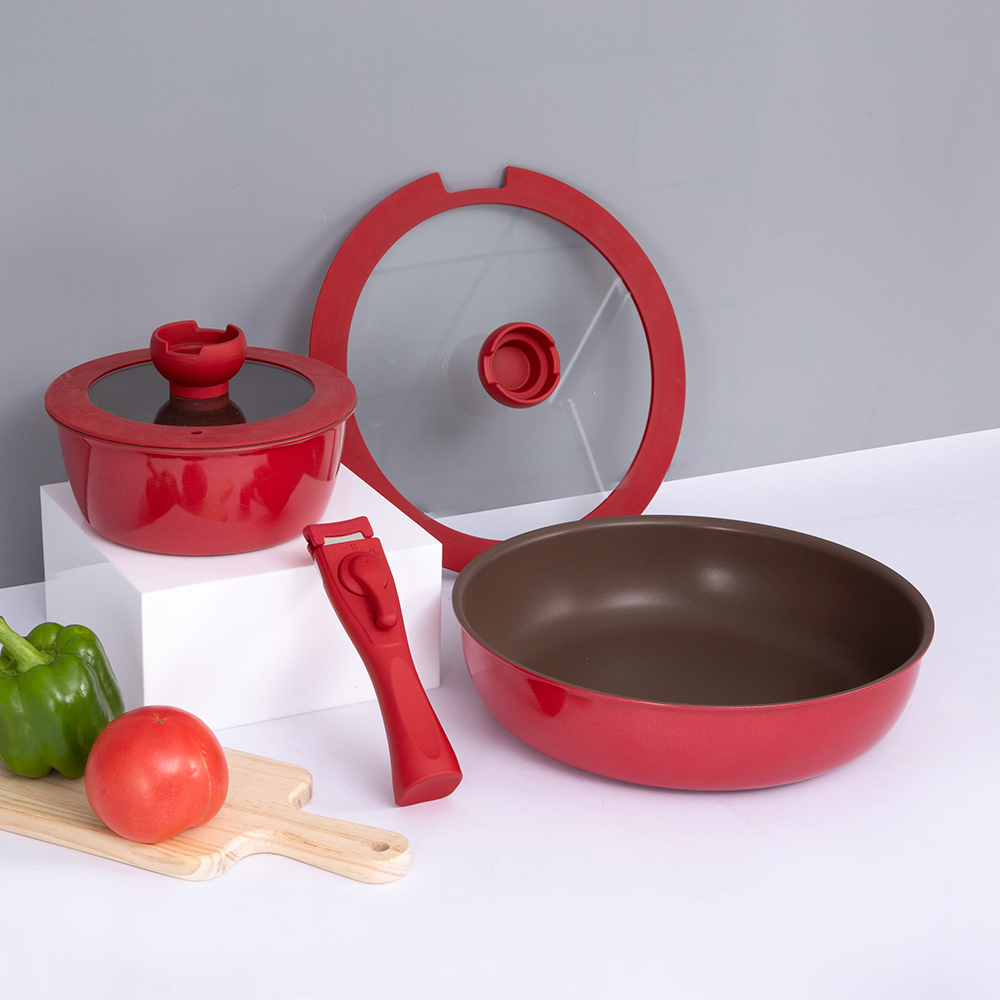
-3.jpg "24X5CM black medicinal stone coating Aluminum frying pan with glass lid DB-2405H")
-5.jpg "28X5.5CM black medicinal stone coating Aluminum frying pan with glass lid DB-2855H")
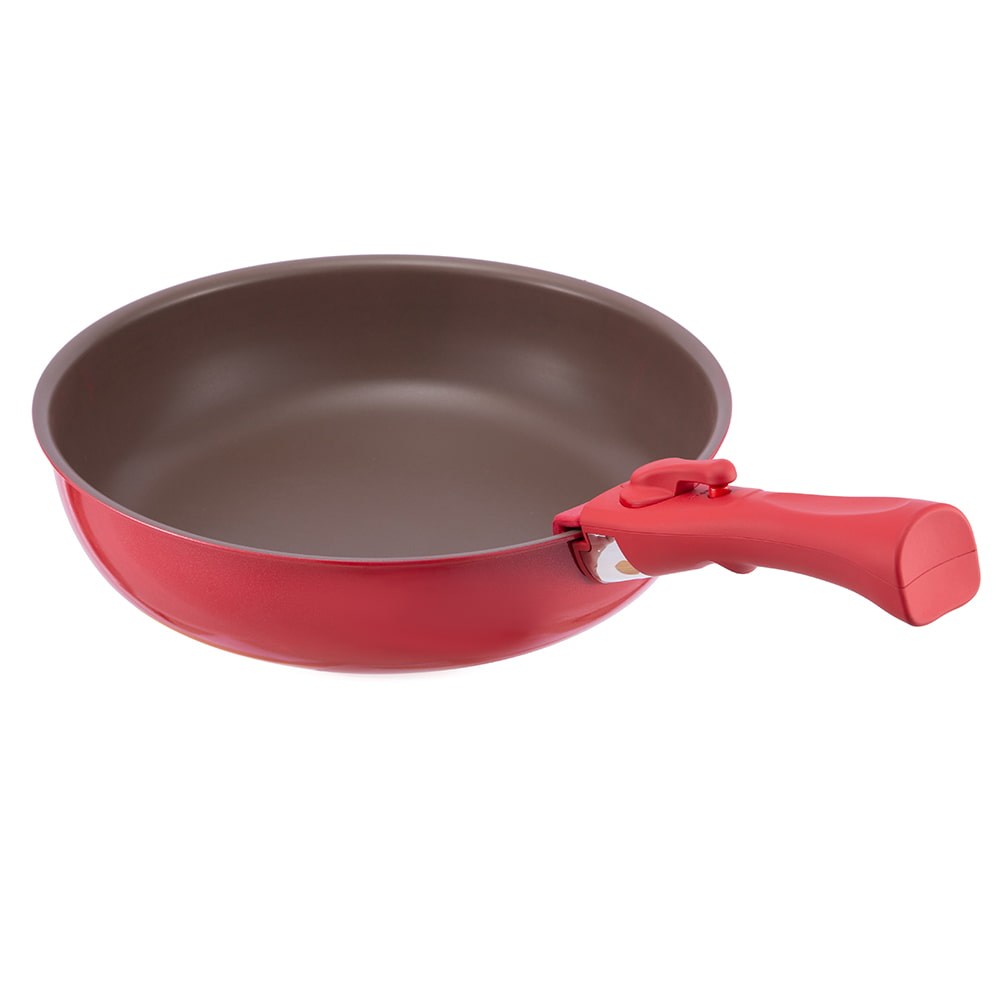
-3.jpg "24X5CM white medicinal stone coating Aluminum frying pan with glass lid DB-2405B")
-9.jpg "20X4.3cm Olive Green Food Safety Coated Stainless Steel 304 Frying Pan JY-2043L")
-3.jpg "20*4.3CM Single long handle uncovered coated frying pan JY-2043NP")
-14.jpg "24X4.5cm Olive Green Food Safety Coated Stainless Steel 304 Frying Pan JY-2445L")