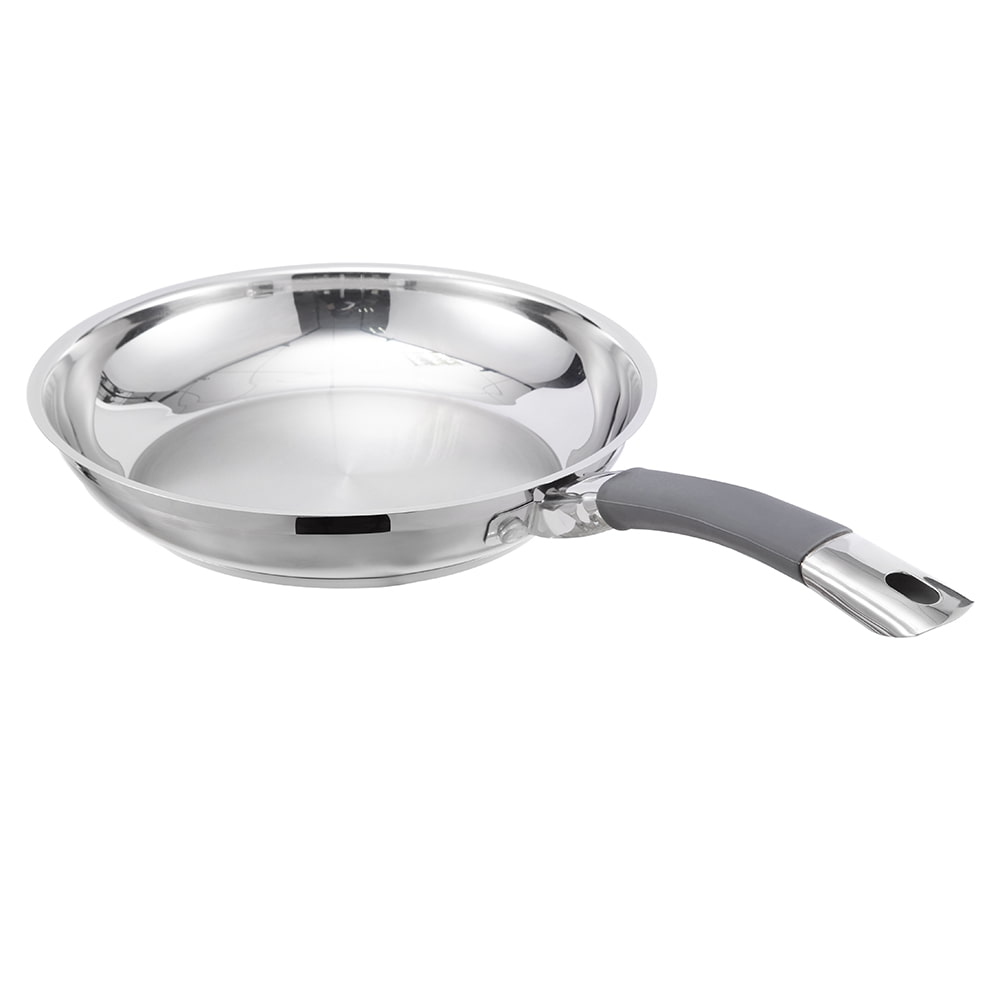
The choice of cookware materials, especially granite style non‑stick aluminum fry pan surfaces, is driven increasingly by performance requirements, regulatory trends, and lifecycle economics in commercial and industrial environments. Two of the most prevalent non‑stick surface technologies are granite‑style coatings and PTFE (polytetrafluoroethylene)‑based coatings. Although both provide non‑stick performance on aluminum substrates, their material structures, thermomechanical properties, durability mechanisms, manufacturing implications, and failure modes differ substantially.
In commercial and industrial culinary applications, cookware is evaluated not only for user experience but for durability, maintenance costs, safety compliance, and lifecycle performance. The granite style non‑stick aluminum fry pan has emerged as a widely specified option where a balance of non‑stick functionality and perceived surface robustness is required.
However, distinguishing between surface technologies — especially granite‑style coatings vs PTFE non‑stick coatings — is essential for objective specification.
At the highest level, a non‑stick cookware surface system includes:
Before contrasting the two principal categories, it is useful to define the system elements.
Aluminum is widely used in fry pans due to:
However, aluminum alone is not wear‑resistant and cannot provide inherent non‑stick properties. Surface technologies are therefore indispensable.
The term “granite style” refers to a multi‑layer coating system applied to aluminum, typically consisting of:
The granite style system may include:
The result is a surface with micro‑mechanical anchoring rather than reliance purely on low surface energy polymers.
Typical materials used include:
| Component | Function |
|---|---|
| Ceramic/mineral particles | Provide hardness and abrasion resistance |
| Binder matrix (e.g., epoxy or inorganic resin) | Provides adhesion and structural integrity |
| Surface texture agents | Create controlled roughness for slip performance |
| Wear‑resistant fillers (optional) | Add reinforcement against abrasion |
The composite nature of granite-style coatings gives them characteristics intermediate between polymer‑dominated surfaces and hard inorganic coatings.
PTFE (polytetrafluoroethylene) coatings are a more established class of non‑stick surfaces.
PTFE coatings consist of:
The PTFE molecule has extremely low surface energy due to strong fluorocarbon bonds, which provides non‑stick behavior.
| Component | Function |
|---|---|
| Primer / adhesion layer | Enhances bond to aluminum alloy |
| PTFE layer(s) | Provides primary non‑stick surface |
| Top coat (optional) | Adds wear and scratch resistance |
PTFE coatings are polymeric in nature and rely on physical and chemical adhesion to the underlying surface.
The adhesion mechanism between the coating and aluminum substrate strongly influences durability, thermal cycling performance, and resistance to delamination.
Granite-style coatings may rely on:
The presence of mineral fillers increases the coefficient of friction between coating and substrate, improving anchoring.
Key Observation: The bonding is often reinforced by the composite structure of the coating itself.
PTFE displays inherently low chemical bonding potential with metals. Therefore, PTFE systems typically use:
The adhesion mechanisms are largely surface energetics and interfacial bonding, which differ from the mechanical anchoring seen in composite coatings.
Here, we compare thermal stability, expansion behavior, and heat transfer considerations.
Aluminum’s thermal conductivity remains the dominant factor in heat transfer; coatings contribute minor differences:
In engineering specifications where rapid and uniform heat distribution is required, aluminum substrate design (thickness, geometry) is often more critical than coating type. However, the coating’s thermal resistance affects surface temperatures and perceived responsiveness.
Granite style and PTFE coatings differ in their maximum service temperatures:
In technical evaluations where high‑temperature searing or sustained high heat is common, understanding the thermal degradation behavior of each coating type is essential.
Differences in CTE between the aluminum substrate and the coating material influence:
Granite-style composite coatings can be engineered to better match aluminum’s CTE due to filler content, whereas PTFE’s CTE difference is greater, necessitating careful control of adhesion layers.
Tribology — the study of friction and wear — is critical for surfaces subjected to repeated mechanical contact (utensils, cleaning).
Wear mechanisms include:
Granite style composite coatings often display better abrasive wear resistance due to mineral fillers and harder surface microstructures.
In environments where metal utensils or industrial cleaning tools are used, scratch resistance becomes a design criterion:
Manufacturing differences influence consistency, defect rates, and surface performance.
Typical methods include:
Granite-style coatings may require more precise control of particulate dispersion and curing schedules due to composite architectures. Uniform distribution of minerals is essential.
Different coating systems demand specific thermal profiles:
Process control here directly impacts adhesion strength and surface integrity.
Quality control measures typically involve:
Because the surface structure influences performance, non‑destructive testing is often integrated into production lines.
Material choices affect compliance, workplace safety, and environmental impact.
PTFE coatings have been evaluated under various regulatory frameworks due to:
Procurement specifications increasingly require information about:
Technical managers must integrate regulatory compliance into material evaluations.
Granite-style coatings typically rely on inorganic fillers and thermoset binders. Regulatory considerations include:
Material Safety Data Sheets (MSDS) and compliance documentation are essential for B2B procurement.
Evaluating lifecycle performance requires understanding common failure mechanisms.
Lifecycle analysis metrics include:
| Metric | Granite Style Coating | PTFE Coating |
|---|---|---|
| Wear Rate | Lower | Higher |
| Scratch Resistance | Higher | Lower |
| Thermal Limit | Higher | Lower |
| Adhesion Sensitivity | Moderate | High |
| Maintenance Cost | Lower | Moderate |
Engineering evaluations should incorporate real‑world usage scenarios.
When specifying a granite style non‑stick aluminum fry pan system for a B2B application, consider:
| Dimension | Granite Style Non‑Stick | PTFE Non‑Stick |
|---|---|---|
| Material Architecture | Composite with mineral fillers | Polymer‑based fluoropolymer |
| Surface Texture | Controlled micro‑texture | Smooth polymer surface |
| Friction | Moderate | Very low |
| Wear Resistance | High | Moderate |
| Thermal Stability | Higher | Lower |
| Adhesion Mechanism | Mechanical + chemical | Chemical + physical |
| Manufacturing Complexity | Higher | Moderate |
| Regulatory Profile | Inorganic matrix considerations | Polymer/fluoropolymer considerations |
From an engineering and procurement standpoint, understanding the key material differences between granite style non‑stick aluminum fry pans and PTFE‑based counterparts enables more rigorous specification and evaluation.
While PTFE coatings deliver very low friction, the composite nature of granite-style coatings provides improved wear resistance and higher thermal stability in many professional use cases. Each system has trade‑offs that should be considered in the context of application requirements, operating environments, and total lifecycle costs.
Engineers and technical procurement professionals should prioritize:
These criteria drive successful material selection decisions in industrial, commercial, and embedded culinary domains.
A: Granite style coatings use a composite binder system with mineral fillers that create a textured surface, while PTFE coatings are polymer‑based fluoropolymer layers that rely on low surface energy.
A: Granite style coatings often exhibit better wear and scratch resistance due to their inorganic fillers, making them more durable under abrasive conditions.
A: Granite style coatings generally maintain functional integrity at higher surface temperatures compared to PTFE coatings, which are limited by polymer degradation thresholds.
A: Mechanical interlocking and binder chemistry in granite style systems can provide robust adhesion, while PTFE requires strong primers and surface preparation due to its low chemical affinity to metals.
A: Granite style coatings typically tolerate higher surface temperatures, making them more suitable for sustained high heat conditions.
A: Uniform particulate distribution and precise curing schedules are critical for granite style systems, while controlled sintering and adhesion promoter efficacy are key for PTFE.
 No. 1, Jingwei Road, Yangcheng Lake Town, Xiangcheng District, Suzhou City, China
 [email protected]
  +86-13913553688
Copyright © Suzhou Jiayi Stainless Steel Products Co., Ltd.
 Privacy
Wholesale Aluminum/ Stainless Steel Pan and Pot Manufacturers
Privacy
Wholesale Aluminum/ Stainless Steel Pan and Pot Manufacturers

 search
 中文简体
中文简体 English
 русский
 Français
 Español
 日本語
日本語
-4.jpg "20X4.5CM white medicinal stone coating Aluminum frying pan DB-2045B")
-1.jpg "20X4.5CM black medicinal stone coating Aluminum frying pan DB-2045H")
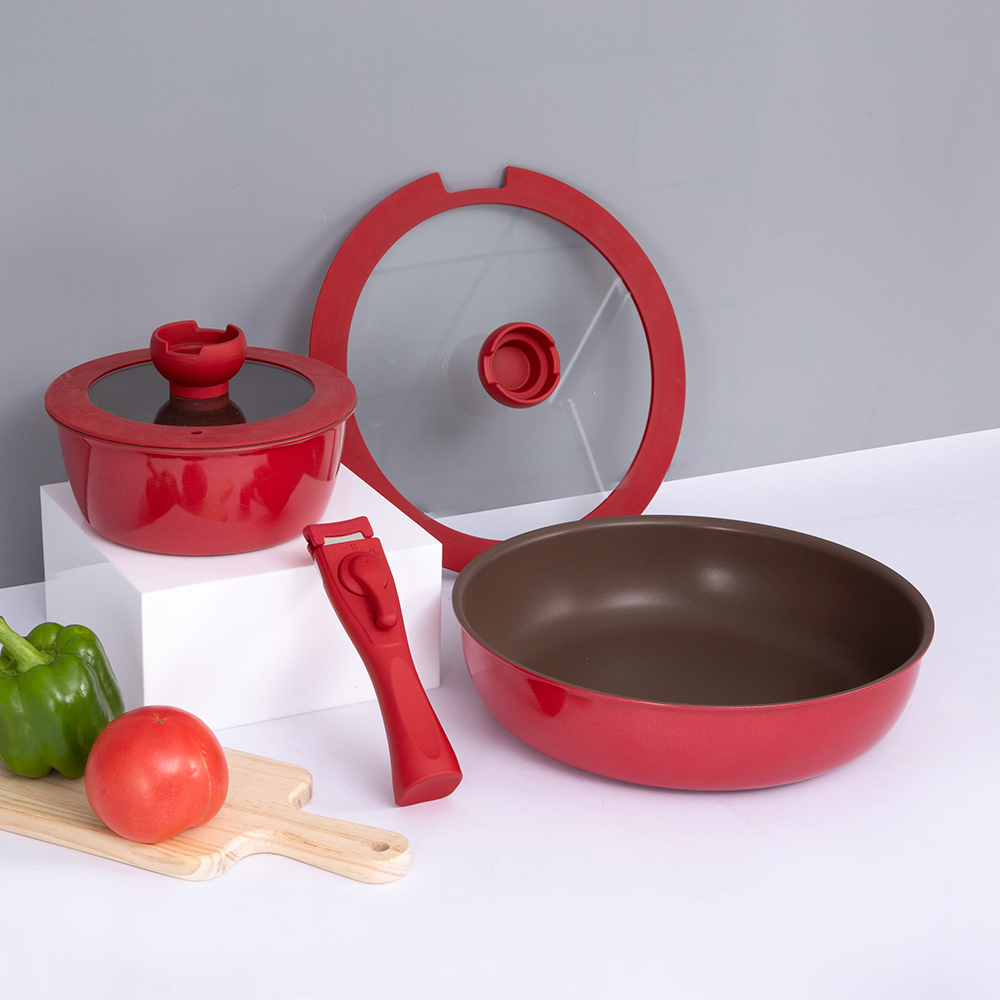
-3.jpg "24X5CM black medicinal stone coating Aluminum frying pan with glass lid DB-2405H")
-5.jpg "28X5.5CM black medicinal stone coating Aluminum frying pan with glass lid DB-2855H")
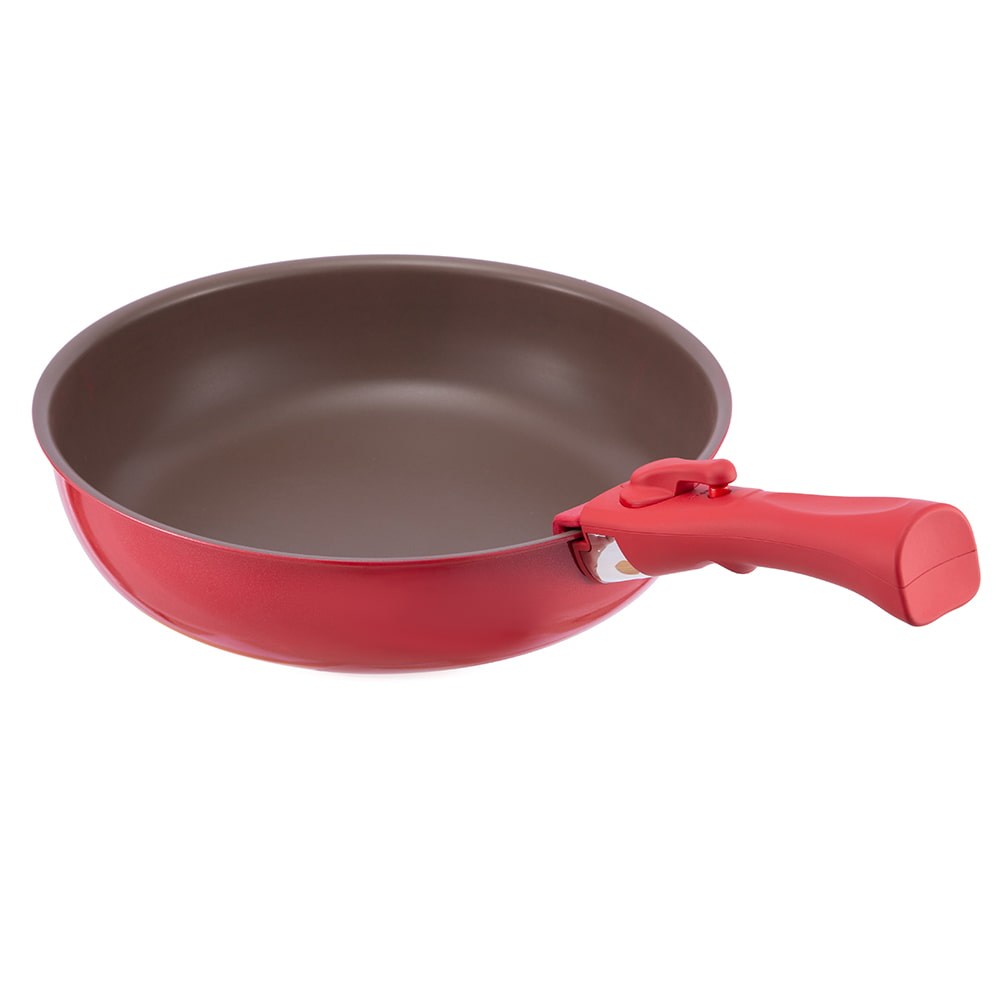
-3.jpg "24X5CM white medicinal stone coating Aluminum frying pan with glass lid DB-2405B")
-9.jpg "20X4.3cm Olive Green Food Safety Coated Stainless Steel 304 Frying Pan JY-2043L")
-3.jpg "20*4.3CM Single long handle uncovered coated frying pan JY-2043NP")
-14.jpg "24X4.5cm Olive Green Food Safety Coated Stainless Steel 304 Frying Pan JY-2445L")