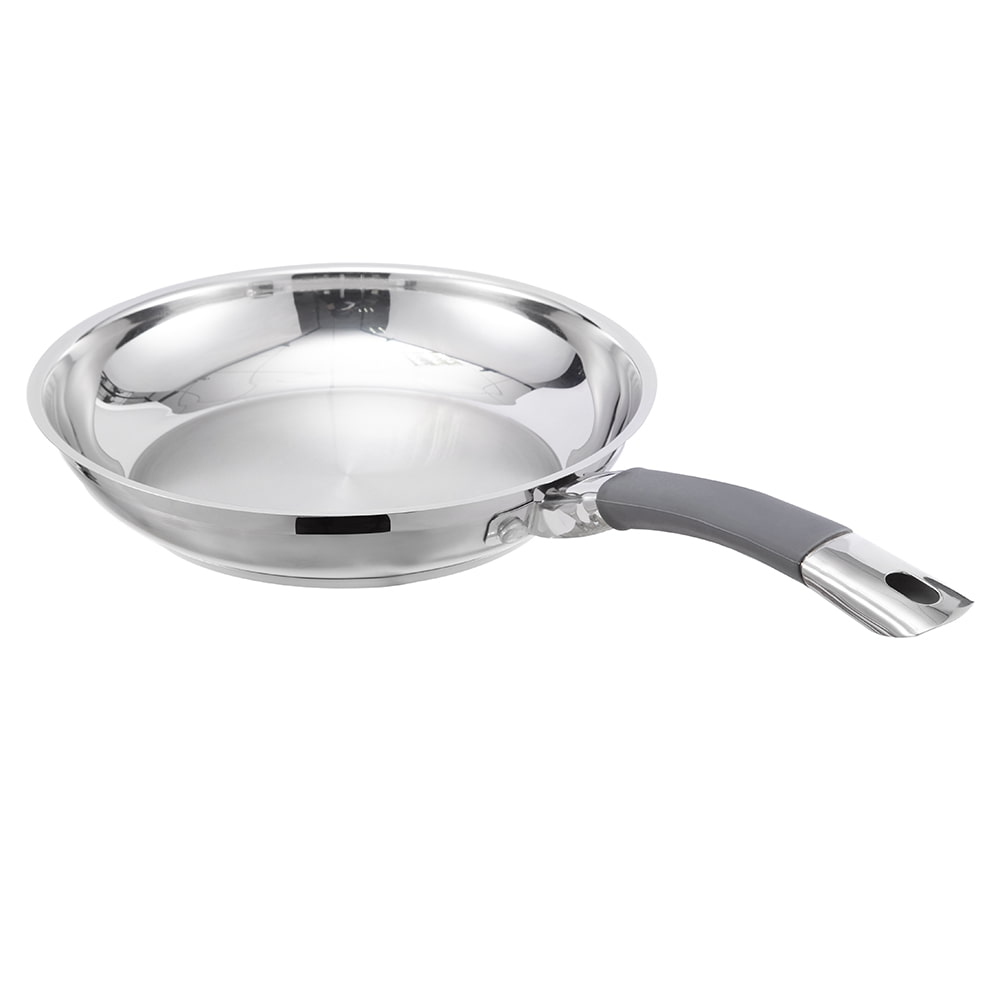
In modern cookware engineering, surface engineering plays a decisive role in performance, durability, and user satisfaction. Among surface technologies, multi‑layer granite coatings have gained attention in industrial and commercial cookware segments due to their unique combination of non‑stick behavior and mechanical robustness. Products such as the granite coated frying pan no lid serve as canonical examples of how engineered surface systems enable desirable thermal and mechanical properties at scale.
A multi‑layer granite coating refers to a composite surface system where layers of binding polymers, inorganic particulates, and reinforcing agents are deposited sequentially onto a metallic substrate. These coatings are engineered to provide:
They differ from single‑layer polymer films by incorporating multiple functional strata, each contributing specific mechanical or thermal properties.
From a system engineering viewpoint, evaluating granite coated frying pan no lid entails examining the coating system integrated with the base structure, including:
Key stakeholders include:
A typical multi‑layer granite coating system can be conceptually divided into the following functional layers:
| Layer Type | Primary Function | Typical Materials |
|---|---|---|
| Primer/Adhesion Layer | Ensures bonding between substrate and upper layers | Epoxy, silane coupling agents |
| Intermediate / Reinforcement Layer | Provides mechanical bulk and supports wear resistance | Ceramic particles, fluoropolymers, inorganic fillers |
| Top / Wear Layer | Interfaces with use environment; governs non‑stick and scratch resistance | PTFE variants, ceramic reinforced composites |
Note: The actual chemistry can vary by supplier and formulation strategy, but the functional classification remains consistent across systems.
Thermal distribution refers to the uniformity of temperature across the cooking surface during heating. Uneven distribution leads to hot spots and cold zones, which in industrial applications can compromise process repeatability and energy efficiency.
In systems employing a granite coated frying pan no lid, thermal distribution is influenced by:
To understand the impact of multi‑layer coatings on thermal behavior, we must consider the interplay of these mechanisms:
A well‑engineered coating minimizes thermal impedance while preserving durability.
Each layer contributes a thermal impedance — a resistance to heat flow. In multi‑layer systems:
However, optimized formulations ensure these layers remain thin enough to limit thermal resistance while thick enough to provide mechanical functionality.
The overall thermal impedance ( R_{total} ) is the sum of individual layer impedances:
Note: Mathematical formulations are intentionally omitted per user constraints.
Qualitatively, engineers should evaluate:
Commercial kitchens and institutional food services require consistent heating performance across a range of stovetops:
The multi‑layer granite coating must not add excessive thermal resistance, which could exacerbate inherent heat source non‑uniformities.
Common evaluation methods relevant to B2B technical procurement and engineering include:
These techniques provide quantitative data to assess how coating systems behave under operational conditions relevant to target use cases.
Scratch resistance refers to the ability of the surface to resist mechanical abrasion and deformation caused by utensils, cleaning tools, and general handling.
In industrial and institutional settings, this is critical because:
Scratch resistance in multi‑layer granite coatings arises primarily from:
These mechanisms reduce material removal and prevent surface deformation.
Engineers and procurement specialists rely on systematic testing to quantify scratch performance:
These tests can be standardized or customized based on the intended application environment (e.g., commercial restaurants versus institutional cafeterias).
The effectiveness of a multi‑layer system hinges on:
A poor balance can lead to:
Thus, an optimal design maintains sufficient ductility while maximizing mechanical resilience.
Though thermal distribution and scratch resistance are distinct performance domains, they interact in multi‑layer systems:
Trade‑offs need to be balanced based on intended use cases and performance priorities.
When specifying or evaluating a granite coated frying pan no lid system from a procurement or design perspective, consider:
| Criterion | Engineering Metric | Relevance |
|---|---|---|
| Thermal uniformity | Degree of temperature variation on surface | Affects cooking consistency |
| Thermal response time | Time to reach target temperature | Operational efficiency |
| Scratch resistance | Abrasion cycles to failure | Operational durability |
| Coating adhesion | Peel/impact performance | Long‑term reliability |
| Chemical resistance | Stability against detergents | Maintenance and cleanliness |
| Manufacturing repeatability | Process capability indices | Quality assurance |
This table illustrates the multi‑dimensional evaluation needed when comparing different coating systems.
The performance of multi‑layer coatings depends heavily on manufacturing processes:
Variabilities in these steps can translate directly into performance dispersion.
For B2B procurement and process engineering, quality metrics should include:
These metrics should be integrated into supplier quality agreements and production monitoring systems.
When drafting technical specifications for procurement or engineering review, include the following:
Clear, quantitative specifications enable objective evaluation of competing engineering proposals.
Assess potential failures and their impacts:
Risk mitigation strategies can include:
The following hypothetical comparison illustrates how two coating systems might perform against key metrics:
| Metric | System A | System B | Commentary |
|---|---|---|---|
| Temp variation (°C) | ± 10 | ± 8 | System B shows tighter distribution |
| Thermal response (sec) | 120 | 140 | System A responds more quickly |
| Abrasion cycles | 10,000 | 15,000 | System B lasts longer under wear |
| Adhesion rating | 5B | 4B | System A exhibits stronger layer adhesion |
| Chemical resistance | High | High | Comparable performance |
This illustrative table highlights the necessity of multi‑criteria decision analysis when evaluating coating solutions.
Factors such as heat source type, cleaning regimen, and mechanical handling will influence actual performance. Design specifications should reflect real use cases:
Evaluating surface systems solely on upfront cost is insufficient. Instead, consider:
These aspects are critical in B2B decision‑making environments.
The deployment of multi‑layer granite coatings in products such as the granite coated frying pan no lid represents a sophisticated balancing act between thermal distribution and scratch resistance. From a systems engineering perspective, these surface systems must be evaluated not just on single metrics but on how their architectural design, material composition, and manufacturing controls contribute holistically to performance.
Key insights include:
Layer thickness determines the thermal impedance each layer introduces. Thicker top layers with low-conductivity materials can slow heat transfer, potentially causing uneven heating—optimized architectures balance thickness for durability without compromising thermal responsiveness.
Standard abrasion testers, micro‑indentation hardness tests, and controlled utensil wear simulations are commonly used. Metrics such as abrasion cycles to failure help quantify durability in repeatable ways.
Yes, coating systems are independent of the heat source. However, the substrate material beneath the coating must be compatible with induction (e.g., ferromagnetic base) to ensure efficient coupling.
Surface preparation is critical for adhesion. Poorly prepared surfaces can lead to delamination under thermal cycling or mechanical stress, reducing both thermal uniformity and scratch resistance.
Specifications should include quantitative metrics for thermal uniformity, abrasion resistance, adhesion strength, and chemical stability, reflecting real operational conditions. Clear metrics enable objective supplier comparison and quality control.
Below are representative industry and technical sources (note: general references; specific vendor data and proprietary reports are excluded to maintain neutrality):
 No. 1, Jingwei Road, Yangcheng Lake Town, Xiangcheng District, Suzhou City, China
 [email protected]
  +86-13913553688
Copyright © Suzhou Jiayi Stainless Steel Products Co., Ltd.
 Privacy
Wholesale Aluminum/ Stainless Steel Pan and Pot Manufacturers
Privacy
Wholesale Aluminum/ Stainless Steel Pan and Pot Manufacturers

 search
 中文简体
中文简体 English
 русский
 Français
 Español
 日本語
日本語
-4.jpg "20X4.5CM white medicinal stone coating Aluminum frying pan DB-2045B")
-1.jpg "20X4.5CM black medicinal stone coating Aluminum frying pan DB-2045H")
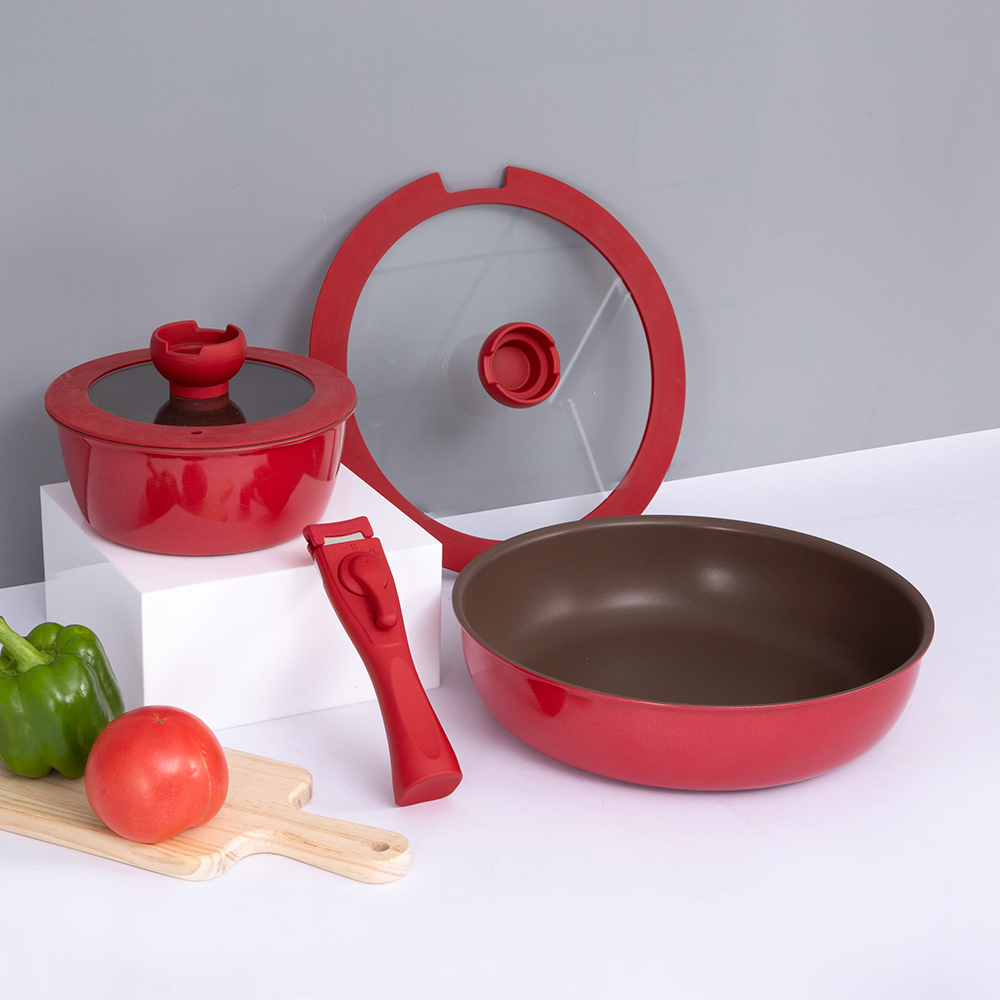
-3.jpg "24X5CM black medicinal stone coating Aluminum frying pan with glass lid DB-2405H")
-5.jpg "28X5.5CM black medicinal stone coating Aluminum frying pan with glass lid DB-2855H")
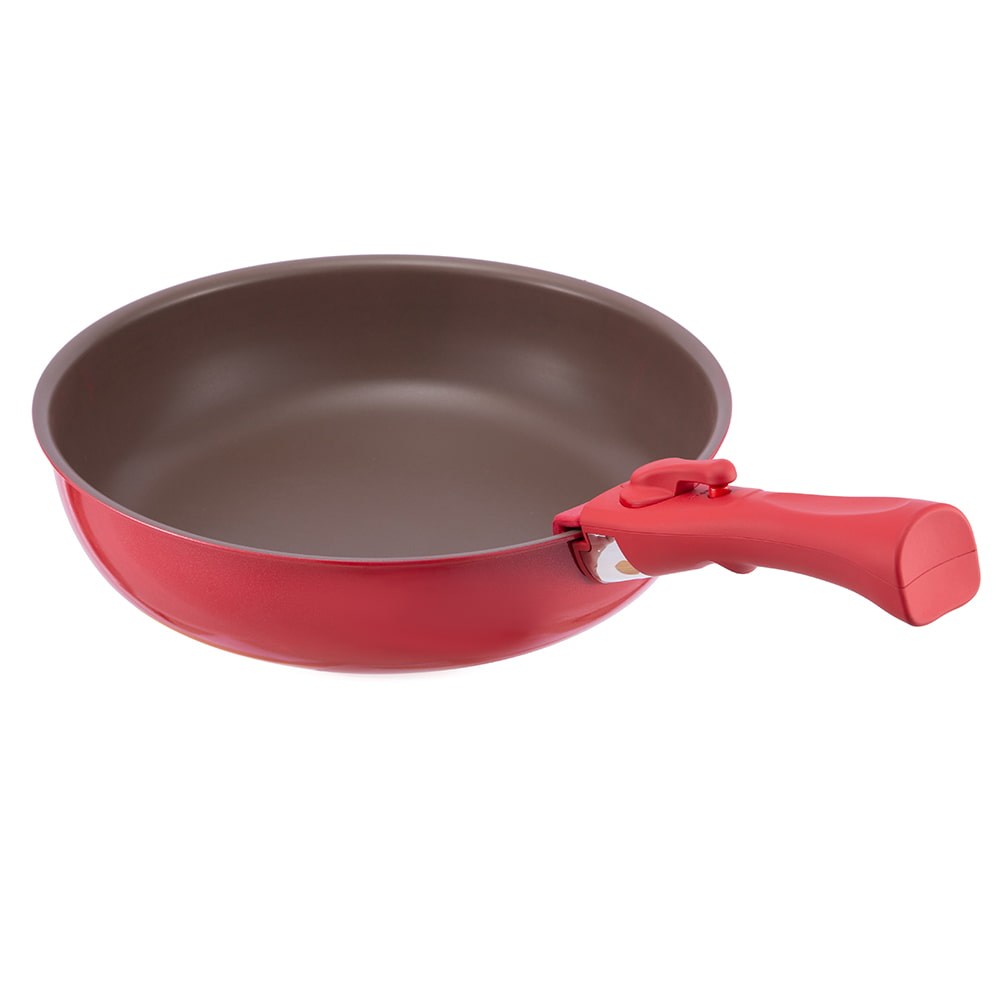
-3.jpg "24X5CM white medicinal stone coating Aluminum frying pan with glass lid DB-2405B")
-9.jpg "20X4.3cm Olive Green Food Safety Coated Stainless Steel 304 Frying Pan JY-2043L")
-3.jpg "20*4.3CM Single long handle uncovered coated frying pan JY-2043NP")
-14.jpg "24X4.5cm Olive Green Food Safety Coated Stainless Steel 304 Frying Pan JY-2445L")