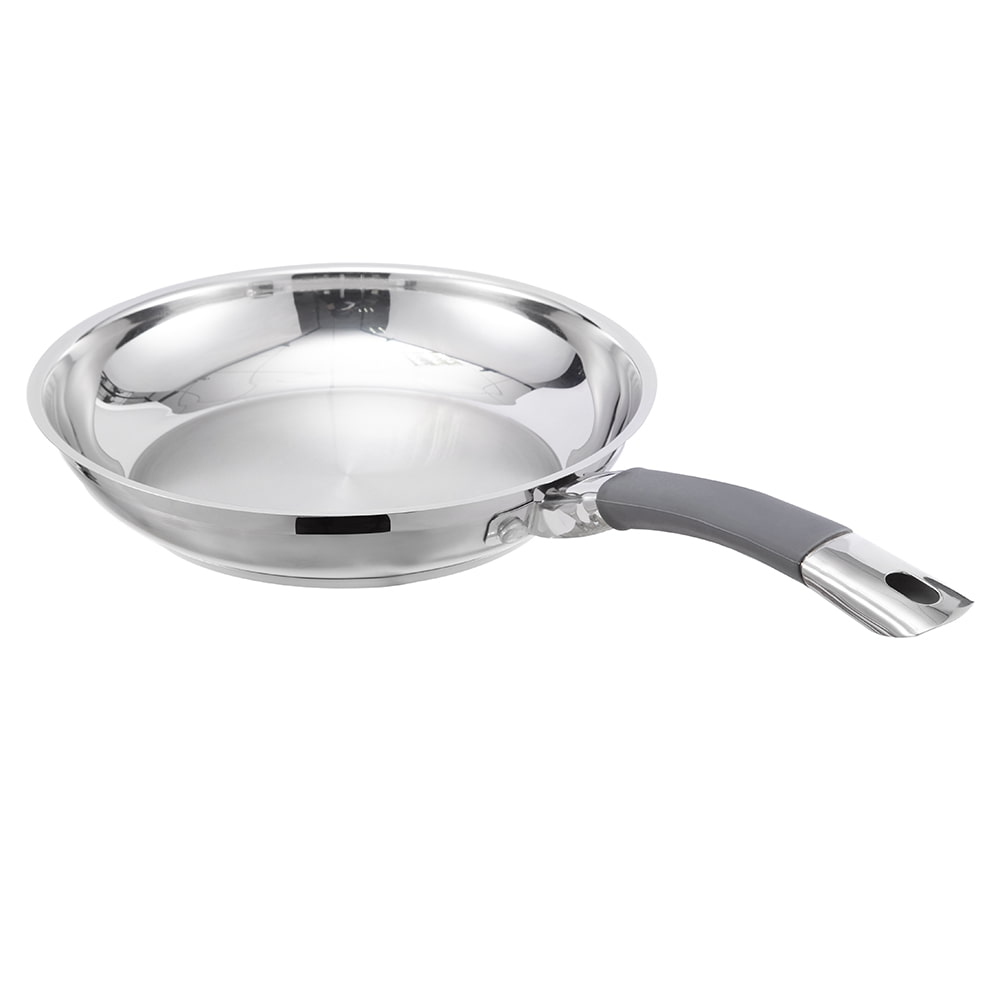
In modern cookware manufacturing and procurement, aluminum-based pans with stone-inspired coatings have gained sustained attention due to their balance of usability, durability, and cost control. Among the many design variables that determine overall performance, aluminum thickness plays a decisive role. It directly influences how an easy clean stone coated pan behaves during cooking, how long it lasts under repeated use, and how it is perceived by both end users and professional buyers.
Aluminum is widely used as the base material in stone coated cookware because it offers a stable combination of light weight, formability, and reliable thermal responsiveness. In an easy clean stone coated pan, aluminum serves as the structural foundation that supports the stone coating layers, the pan base geometry, and the handle attachment system.
What distinguishes one aluminum pan from another is not simply the presence of aluminum, but how much aluminum is used and how it is distributed. Thickness determines the pan’s structural mass, its resistance to deformation, and its ability to maintain consistent cooking conditions over time.
Aluminum thickness refers to the measured depth of the aluminum body, usually expressed in millimeters, across the pan base and sidewalls. In an easy clean stone coated pan, thickness may vary intentionally between the bottom and the walls to achieve specific performance goals.
It is important to note that thickness is not a decorative attribute. It is a functional design parameter that affects nearly every aspect of the pan’s behavior, from how it reacts to temperature changes to how it withstands daily handling.
While consumers may associate thickness with “heaviness,” professional evaluation focuses on structural consistency, manufacturing precision, and performance stability rather than subjective weight alone.
One of the most frequently discussed performance aspects of an easy clean stone coated pan is heat distribution. Aluminum thickness plays a central role in how evenly heat spreads across the cooking surface.
A thicker aluminum base tends to provide more uniform heat coverage, reducing the likelihood of localized hot spots that can affect cooking results. This characteristic is particularly relevant for buyers targeting consistent cooking performance and reduced food scorching.
By contrast, thinner aluminum constructions may respond more quickly to heat changes but can exhibit uneven surface temperatures during prolonged cooking. For certain use cases, this responsiveness may be acceptable, but it requires more attentive heat control from the user.
From an industry standpoint, aluminum thickness influences how effectively the stone coating can perform its intended role, as coating effectiveness depends on a stable and evenly heated substrate.
Beyond initial heat distribution, aluminum thickness also affects thermal stability during extended cooking. In an easy clean stone coated pan, thermal stability refers to the pan’s ability to maintain a consistent cooking environment over time without sudden fluctuations.
Thicker aluminum structures generally offer greater thermal inertia, meaning they are less affected by rapid temperature changes when ingredients are added or when cookware is repositioned. This contributes to predictable cooking behavior, which is often associated with professional cookware standards.
For buyers serving markets where users prepare meals over longer durations, such as family cooking or batch preparation, aluminum thickness becomes a key determinant of perceived quality.
The performance of a stone coating is closely linked to the stability of the aluminum beneath it. Aluminum thickness affects how well the coating adheres during application and how it performs during repeated heating and cooling cycles.
A more robust aluminum body provides a stable base for coating layers, reducing stress on the coating surface over time. This contributes to improved stone coating durability and helps preserve the easy clean characteristics that define an easy clean stone coated pan.
Conversely, excessively thin aluminum may be more susceptible to subtle deformation, which can place uneven stress on the coating. Over extended use, this may influence surface consistency and cleaning performance, even if the coating formulation itself remains unchanged.
Structural rigidity is another performance dimension strongly influenced by aluminum thickness. In daily use, cookware is exposed to mechanical stresses such as stirring, stacking, washing, and transport.
A thicker aluminum body generally provides greater resistance to warping, particularly when exposed to repeated heating cycles. This structural stability helps maintain a flat cooking surface, which is critical for compatibility with various heat sources and for maintaining even contact during cooking.
In procurement discussions, this attribute is often linked to long-term usability and reduced customer complaints related to pan deformation.
The “easy clean” characteristic of an easy clean stone coated pan is not determined solely by the coating formulation. Aluminum thickness indirectly contributes to cleaning efficiency by supporting consistent surface behavior.
When heat is evenly distributed and the pan maintains its shape, food residues are less likely to carbonize unevenly or adhere excessively. This supports smoother cleaning experiences and helps preserve the pan’s appearance over time.
From a product knowledge perspective, aluminum thickness should be understood as a supporting factor that enables the coating to perform its cleaning function as intended.
Pan lifespan is a multifaceted concept influenced by material quality, usage patterns, and maintenance practices. Aluminum thickness affects lifespan primarily through its impact on structural integrity and coating support.
A well-balanced thickness profile helps an easy clean stone coated pan maintain its performance characteristics across repeated use cycles. This includes resistance to warping, stable handle attachment, and sustained coating performance.
For buyers evaluating product lifecycle value, aluminum thickness becomes a measurable indicator that complements coating specifications and manufacturing quality controls.
While weight is not the primary performance metric, it remains an important user perception factor. Aluminum thickness contributes directly to overall pan weight, which influences handling comfort and perceived quality.
In an easy clean stone coated pan, an appropriate balance must be achieved. Excessive weight may reduce user comfort, while insufficient weight may lead to perceptions of fragility. Thickness optimization allows manufacturers to align functional performance with ergonomic expectations.
This balance is particularly relevant in markets where cookware is used daily and ease of handling is a purchasing priority.
From a manufacturing standpoint, aluminum thickness affects forming processes, coating application consistency, and quality control parameters. Thicker aluminum requires more precise forming techniques to ensure uniformity across the pan body.
At the same time, thickness consistency simplifies coating application by providing a stable substrate with predictable thermal behavior during curing processes. This contributes to coating consistency and reduces variation across production batches.
For professional buyers, understanding these manufacturing implications helps contextualize pricing differences among easy clean stone coated pan offerings.
Not all sections of an easy clean stone coated pan are required to have the same aluminum thickness. Many designs intentionally vary thickness between the base and the sidewalls to optimize performance.
A thicker base supports even heat distribution, while slightly thinner sidewalls improve weight balance and handling. This design approach reflects a functional prioritization of cooking performance without compromising usability.
Understanding this variation allows buyers to evaluate product specifications more accurately rather than relying on single thickness figures.
The following table provides a generalized comparison of performance characteristics associated with different aluminum thickness ranges commonly found in stone coated cookware.
| Aluminum thickness range | Heat distribution behavior | Structural stability | Typical use positioning |
|---|---|---|---|
| Thinner construction | Faster heat response, less uniform | Lower rigidity | Entry-level or light-duty use |
| Medium thickness | Balanced heat spread and responsiveness | Moderate stability | General household use |
| Thicker construction | Highly uniform heat distribution | High resistance to warping | Frequent or extended use |
This comparison illustrates that aluminum thickness should be evaluated in relation to intended use rather than in isolation.
Professional buyers often assess aluminum thickness alongside other technical parameters when sourcing an easy clean stone coated pan. Thickness serves as a proxy indicator for expected performance outcomes when combined with coating specifications and manufacturing standards.
The table below outlines common buyer evaluation points associated with aluminum thickness.
| Evaluation focus | Relevance of aluminum thickness |
|---|---|
| Durability expectations | Thicker aluminum supports longer service life |
| Cooking consistency | Adequate thickness improves surface uniformity |
| Coating longevity | Stable substrate reduces coating stress |
| User perception | Balanced weight suggests quality construction |
These criteria demonstrate how aluminum thickness integrates into broader sourcing and product assessment frameworks.
Different cooking environments place varying demands on cookware. Aluminum thickness influences how an easy clean stone coated pan adapts to these environments, particularly in terms of stability and responsiveness.
In settings where cookware is frequently moved on and off heat sources, thickness contributes to maintaining consistent performance. This is especially relevant for users seeking reliable non-stick cookware performance across varied cooking routines.
Thickness also affects how the pan responds to temperature adjustments, which can influence user confidence and satisfaction.
Consistency over time is a key benchmark for evaluating cookware quality. Aluminum thickness supports long-term consistency by minimizing gradual changes in shape and surface behavior.
An easy clean stone coated pan with appropriate thickness is better positioned to maintain its original performance profile, reducing variability that can emerge after extended use.
This aspect is particularly relevant for buyers focused on repeat purchase satisfaction and reduced product returns.
While this article avoids environmental claims that cannot be universally substantiated, it is relevant to note that aluminum thickness influences material usage efficiency. Optimized thickness balances performance needs with responsible material consumption.
For procurement professionals, thickness optimization reflects a design efficiency mindset rather than excessive material use.
A common misconception is that thicker aluminum automatically equates to superior performance in all contexts. In reality, performance depends on how thickness is integrated into overall pan design.
An easy clean stone coated pan benefits from appropriate thickness, not maximal thickness. Excess material without functional purpose may negatively affect handling without delivering proportional performance gains.
Understanding this nuance allows buyers and users to make informed evaluations based on use requirements rather than assumptions.
Thickness consistency across production batches is a critical quality indicator. Variations in aluminum thickness can lead to noticeable differences in cooking behavior and coating performance.
Manufacturers that maintain tight thickness tolerances are better positioned to deliver predictable performance in each easy clean stone coated pan produced.
For buyers managing large-scale distribution, this consistency supports brand reliability without requiring reference to specific brand identities.
Aluminum thickness should not be viewed in isolation. It interacts with coating composition, pan geometry, and manufacturing quality to determine overall performance.
In an easy clean stone coated pan, thickness acts as a foundational parameter that enables other design elements to function as intended.
Evaluating thickness alongside complementary specifications leads to more accurate performance expectations.
When reviewing product specifications, thickness figures should be interpreted in context. Buyers are encouraged to consider where thickness is concentrated and how it aligns with intended use scenarios.
Rather than focusing on numerical extremes, emphasis should be placed on functional suitability and consistency across the pan structure.
This approach supports objective decision-making without reliance on marketing language.
Aluminum thickness is a defining factor in the performance profile of an easy clean stone coated pan. It influences heat distribution, structural stability, coating support, cleaning efficiency, and long-term consistency.
By understanding how thickness affects these interconnected performance dimensions, buyers and users can better evaluate cookware offerings based on practical outcomes rather than surface-level attributes.
Ultimately, aluminum thickness should be recognized as a core design consideration that supports the functional integrity and usability of an easy clean stone coated pan across diverse cooking and sourcing contexts.
How does aluminum thickness affect cleaning performance in an easy clean stone coated pan?
Aluminum thickness supports even heat distribution, which reduces uneven residue formation and contributes to easier cleaning over time.
Is thicker aluminum always better for an easy clean stone coated pan?
Not necessarily. Performance depends on balanced thickness that supports stability without compromising handling comfort.
Can aluminum thickness influence coating lifespan?
Yes. A stable aluminum base helps reduce stress on the coating during repeated heating and cooling cycles.
Does aluminum thickness affect pan warping?
Appropriate thickness improves resistance to deformation, helping the pan maintain a flat cooking surface.
Why do some pans have thicker bases than sidewalls?
This design approach prioritizes heat distribution at the cooking surface while maintaining manageable weight and ergonomics.
 No. 1, Jingwei Road, Yangcheng Lake Town, Xiangcheng District, Suzhou City, China
 [email protected]
  +86-13913553688
Copyright © Suzhou Jiayi Stainless Steel Products Co., Ltd.
 Privacy
Wholesale Aluminum/ Stainless Steel Pan and Pot Manufacturers
Privacy
Wholesale Aluminum/ Stainless Steel Pan and Pot Manufacturers

 search
 中文简体
中文简体 English
 русский
 Français
 Español
 日本語
日本語
-4.jpg "20X4.5CM white medicinal stone coating Aluminum frying pan DB-2045B")
-1.jpg "20X4.5CM black medicinal stone coating Aluminum frying pan DB-2045H")
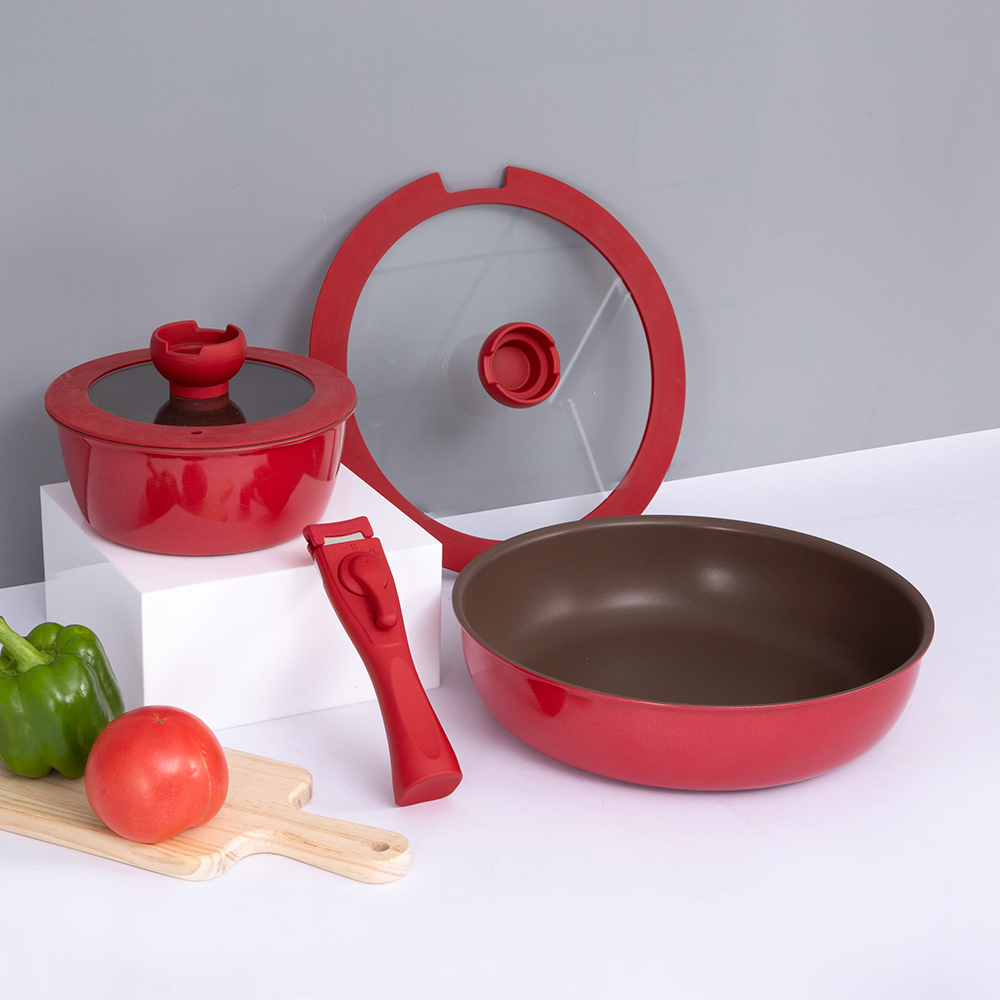
-3.jpg "24X5CM black medicinal stone coating Aluminum frying pan with glass lid DB-2405H")
-5.jpg "28X5.5CM black medicinal stone coating Aluminum frying pan with glass lid DB-2855H")
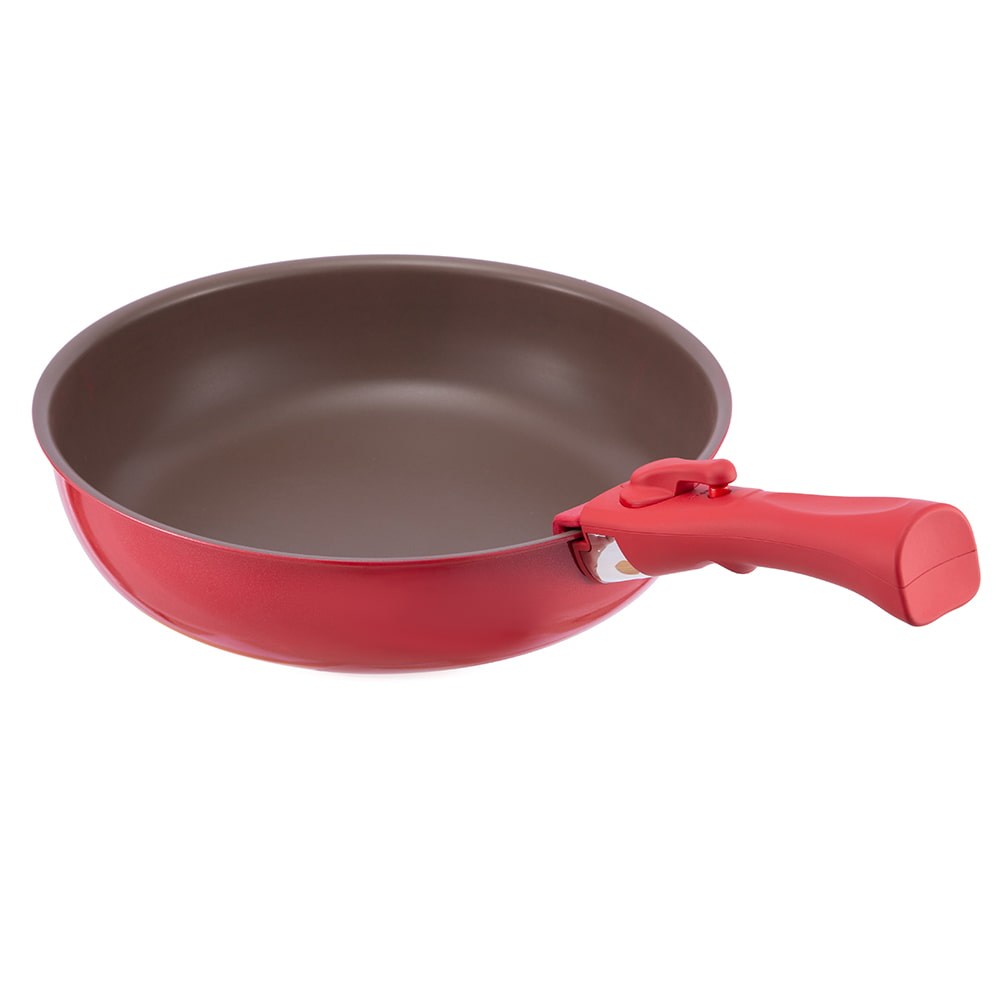
-3.jpg "24X5CM white medicinal stone coating Aluminum frying pan with glass lid DB-2405B")
-9.jpg "20X4.3cm Olive Green Food Safety Coated Stainless Steel 304 Frying Pan JY-2043L")
-3.jpg "20*4.3CM Single long handle uncovered coated frying pan JY-2043NP")
-14.jpg "24X4.5cm Olive Green Food Safety Coated Stainless Steel 304 Frying Pan JY-2445L")