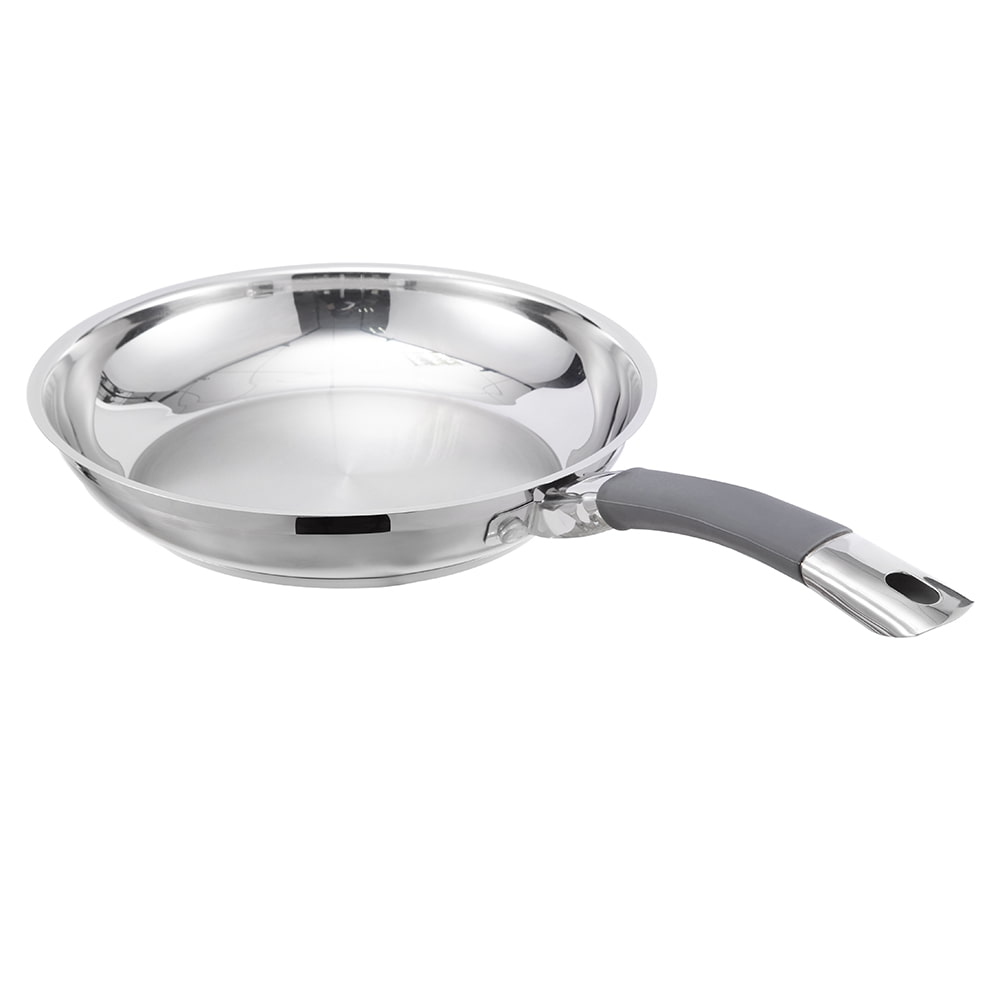
The modern kitchen has evolved significantly, and cookware technology has progressed to meet changing user expectations surrounding safety, convenience, and cooking performance. Among the many cookware types available today, the durable granite coating fry pan stands out for its balanced combination of non-stick capability, durability, and compatibility with various everyday cooking needs.
A key characteristic that defines the durable granite coating fry pan is its non-stick surface, which allows users to cook with less oil, release food smoothly, and clean the pan with ease. Despite its popularity, many consumers and industry professionals still ask an essential question: How does the granite coating in a durable granite coating fry pan achieve its non-stick effect?
The granite coating applied to a durable granite coating fry pan is not composed of natural stone material. Instead, it is a multi-layer engineered coating designed to simulate the strength and aesthetic of natural granite while offering the advantages of modern non-stick technology. This coating is generally derived from advanced non-stick systems reinforced with mineral-based particles, creating a visually stone-like surface with improved wear resistance.
The increased consumer interest in stone-derived non-stick pans and mineral-reinforced cookware has driven manufacturers to refine these coatings so they can deliver strong non-stick properties without relying on older, less durable non-stick technologies.
To understand the coating structure, it is helpful to review its primary components. A typical durable granite coating fry pan may include several functional layers:
| Layer Type | Functional Purpose | Characteristics |
|---|---|---|
| Base metal layer | Provides mechanical strength and heat conduction | Often made of aluminum or similar metals |
| Primer layer | Enhances adhesion between metal surface and coating | Designed for strong bonding |
| Reinforced granite-inspired layer | Adds durability, structure, and texture | Contains mineral particles |
| Non-stick topcoat | Direct contact with food and cooking utensils | Smooth, low-friction surface |
Each layer contributes to the final non-stick effect, creating a balanced combination of durability, heat transfer performance, and surface smoothness.
The top layer of a durable granite coating fry pan features a carefully engineered microtexture. This microtexture helps reduce the overall surface contact between the pan and the food being cooked. When food touches a highly micro-structured surface, adhesion is minimized, allowing cooked items to release more easily.
This effect is notably different from uncoated metal pans, where the natural surface irregularities may trap food, causing sticking. By refining these surface variations and controlling their distribution, the granite coating enhances non-stick behavior without requiring overly soft or delicate coating materials.
Another important factor contributing to the non-stick nature of a durable granite coating fry pan is the low-friction characteristic of the coating material. The coating is formulated to create a surface that naturally resists bonding with food, especially when moderate amounts of cooking oil are used. Users searching for easy-release frying pans or low-oil cooking pans often find granite-coated cookware an appealing choice for this reason.
In addition to structural design, thermal stability also plays a role. A surface that maintains consistency under cooking temperatures is better able to prevent food adhesion. The engineered coating of a durable granite coating fry pan withstands a variety of typical household cooking temperatures without degrading, thereby preserving its surface integrity and non-stick effect through prolonged use.
Before the coating is applied, the metal body of the pan undergoes careful surface preparation. This step helps ensure strong adhesion between the coating layers and the base metal. Techniques such as mechanical roughening and surface cleaning are used to remove impurities, oils, or particles that might interfere with bonding.
The granite-inspired coating is applied in multiple stages. Each layer is designed with a specific purpose: bonding, reinforcement, or non-stick performance. Controlled spraying or rolling methods help create uniform thickness throughout the pan’s cooking surface.
Achieving uniformity is essential because it directly influences the final non-stick performance. Any inconsistency could result in uneven heating or compromised durability.
Once the coating layers are applied, the pan is subjected to high-temperature curing cycles. These cycles help solidify the coating layers and achieve the characteristic texture of a durable granite coating fry pan. Through controlled heating processes, the coating achieves the hardness, bond strength, and surface smoothness necessary for reliable non-stick performance.
Mineral particles added to the coating help increase hardness and create a more durable cooking surface. These particles improve resistance to abrasion and support the long-term non-stick effect by reducing early wear. When consumers search for scratch-resistant pans or durable stone-coated frying pans, they are often seeking the benefits that such reinforcement provides.
Although the base metal is primarily responsible for heat conduction, reinforced layers help maintain surface consistency. A structurally stable surface distributes heat more evenly, reducing hot spots that may cause food to burn or stick.
This even heat distribution contributes indirectly to non-stick performance by preventing localized overheating, which can cause proteins or carbohydrates to adhere more strongly to the surface.
One of the key selling points of a durable granite coating fry pan is its ability to maintain non-stick properties over long-term use. The combination of engineered surface texture, mineral reinforcement, and curing processes helps the coating withstand routine kitchen activities such as sautéing, searing, and simmering.
The coating on a durable granite coating fry pan handles common household cooking activities without degrading. Typical conditions such as moderate oil use, regular heat exposure, and contact with soft utensils do not significantly compromise the coating structure. Maintaining stable performance under these conditions supports the non-stick effect.
Many users are increasingly interested in cookware that supports lower-oil cooking methods. The surface characteristics of a durable granite coating fry pan help reduce the amount of oil necessary for cooking, making it an appealing option for those seeking health-conscious cooking pans and reduced-oil cookware.
Preheating the pan briefly can enhance the non-stick effect by preparing the surface to interact optimally with food moisture and oils. When the pan temperature is consistent, food is less likely to bond with the surface.
While granite coatings are designed to be more durable than some traditional non-stick surfaces, using utensils that avoid abrasive edges helps preserve the coating’s non-stick properties. Wooden, silicone, and nylon utensils are commonly recommended.
To maintain the non-stick performance of a durable granite coating fry pan, users are encouraged to clean the pan gently after use. Abrasive cleaners may gradually reduce the coating’s smoothness.
Following appropriate cleaning methods ensures the surface microtexture remains intact, supporting long-term performance. This contributes to search interest in terms such as easy-clean frying pans.
Traditional non-stick coatings often rely on smooth synthetic polymer layers, while granite coatings integrate mineral reinforcements for added durability. This difference in composition affects wear resistance, texture, and stability under various cooking conditions.
A durable granite coating fry pan has a slightly textured feel compared to some smooth non-stick layers. This texture helps reduce food adhesion while enhancing scratch resistance. Additionally, the surface tends to exhibit a more natural aesthetic, contributing to the popularity of stone-effect cookware.
The combination of mineral reinforcement and engineered coating systems provides a good balance of strength and non-stick effect. This balance is one of the main reasons consumers gravitate toward cookware advertised with durability, scratch resistance, and stone-like non-stick technology.
A durable granite coating fry pan is suitable for a variety of everyday cooking tasks, including frying eggs, sautéing vegetables, cooking meats, and preparing light sauces. Its versatility contributes to its appeal among both home cooks and commercial users.
The durable coating structure generally withstands prolonged use better than some traditional coating types, which helps reduce the frequency of replacing cookware. This appeals to users searching for long-lasting non-stick pans.
Before reaching consumers, pans undergo specific tests to confirm their resistance to surface wear and structural integrity. Evaluations ensure that the durable granite coating fry pan retains its non-stick effect across repeated cooking cycles.
Strict quality checks ensure that each layer of the granite coating is applied evenly and cured properly. Maintaining consistent production standards helps ensure that performance characteristics remain reliable.
Buyers often search for safe cookware and non-toxic non-stick pans. Granite coating systems are engineered to meet relevant safety requirements for cookware used in standard household settings.
Many users want cookware that performs well on a variety of stovetops, including gas, electric, and in many cases induction. The base material of the durable granite coating fry pan determines compatibility, which should be reviewed according to the pan’s construction.
Because the primary appeal of a durable granite coating fry pan lies in the combination of durability and non-stick effect, buyers often evaluate the expected lifespan and maintenance needs before purchasing.
No. The engineered surface does not require traditional seasoning methods used for cast iron. Light oiling before cooking may improve performance.
It is not recommended. While the coating is designed to be more durable, using soft utensils helps preserve its surface.
No. The coating is inspired by granite but produced from engineered non-stick materials reinforced with mineral particles.
This depends on the base material construction. Some models are compatible if they include an induction-ready base.
Allow the pan to cool, then wash gently with warm water and mild detergent. Avoid abrasive cleaning tools.
Some gradual wear is expected with any cookware, but following proper usage and cleaning steps helps extend the non-stick performance.
It is suitable for common household cooking temperatures. Excessively high temperatures should be avoided to preserve the coating.
 No. 1, Jingwei Road, Yangcheng Lake Town, Xiangcheng District, Suzhou City, China
 [email protected]
  +86-13913553688
Copyright © Suzhou Jiayi Stainless Steel Products Co., Ltd.
 Privacy
Wholesale Aluminum/ Stainless Steel Pan and Pot Manufacturers
Privacy
Wholesale Aluminum/ Stainless Steel Pan and Pot Manufacturers

 search
 中文简体
中文简体 English
 русский
 Français
 Español
 日本語
日本語
-4.jpg "20X4.5CM white medicinal stone coating Aluminum frying pan DB-2045B")
-1.jpg "20X4.5CM black medicinal stone coating Aluminum frying pan DB-2045H")
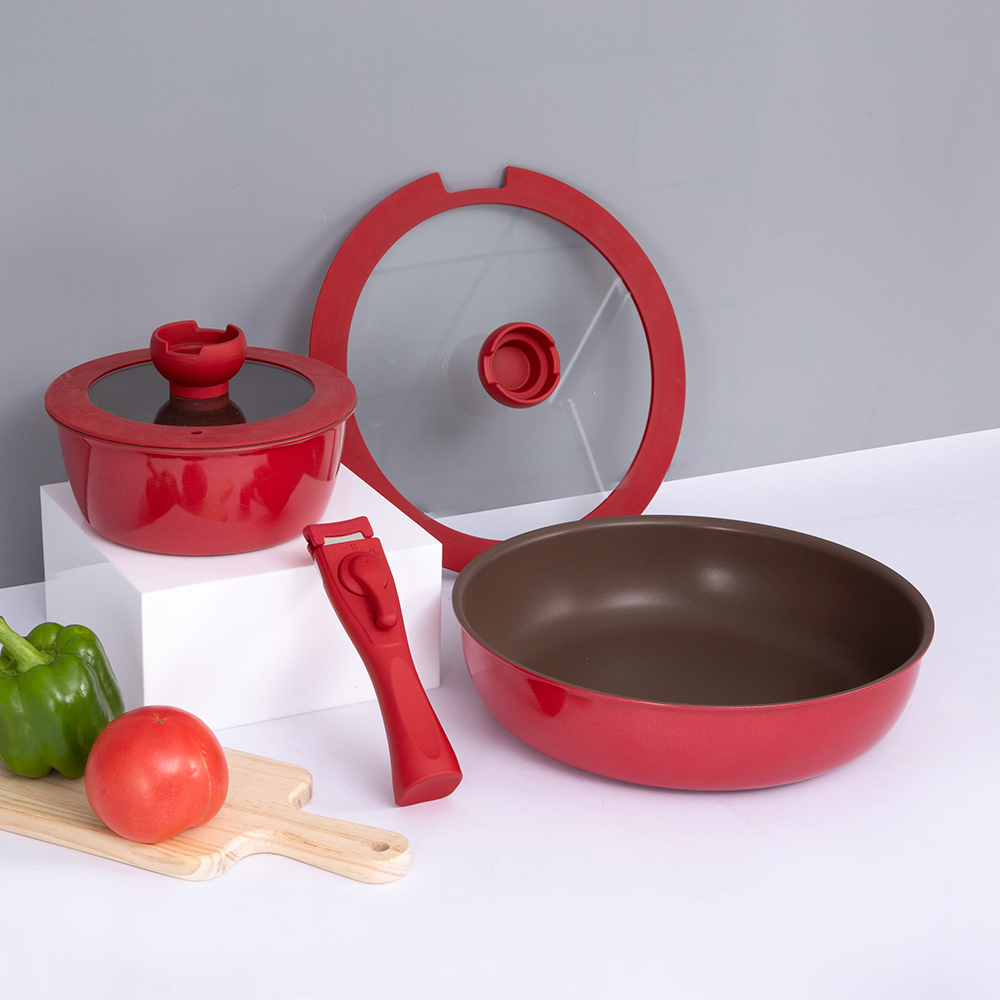
-3.jpg "24X5CM black medicinal stone coating Aluminum frying pan with glass lid DB-2405H")
-5.jpg "28X5.5CM black medicinal stone coating Aluminum frying pan with glass lid DB-2855H")
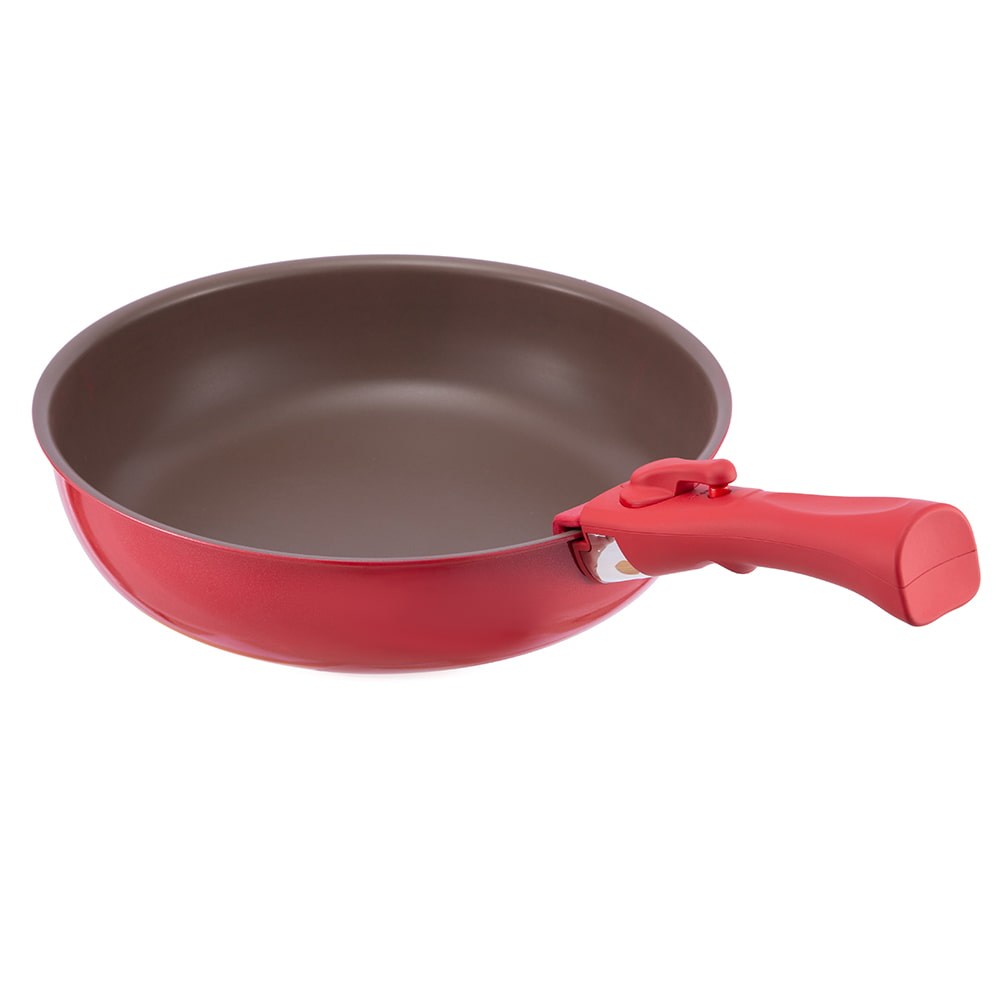
-3.jpg "24X5CM white medicinal stone coating Aluminum frying pan with glass lid DB-2405B")
-9.jpg "20X4.3cm Olive Green Food Safety Coated Stainless Steel 304 Frying Pan JY-2043L")
-3.jpg "20*4.3CM Single long handle uncovered coated frying pan JY-2043NP")
-14.jpg "24X4.5cm Olive Green Food Safety Coated Stainless Steel 304 Frying Pan JY-2445L")