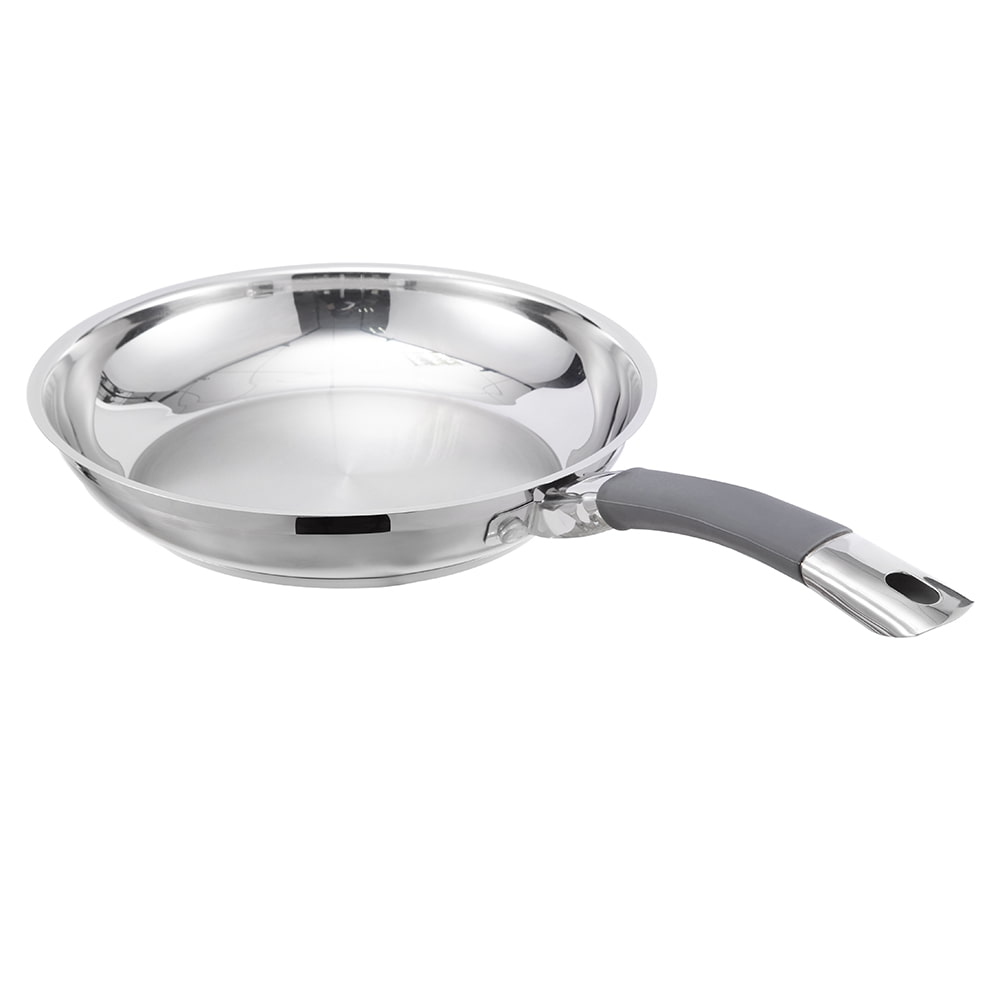
A PFOA-free granite non-stick pan has become a widely discussed option among home cooks, retail buyers, and product researchers in the non-stick cookware market. As consumers increasingly care about material transparency, coating stability, and long-term performance, the differences between granite-coated cookware, ceramic-coated cookware, and PTFE-coated cookware have become an essential topic.
A PFOA-free granite non-stick pan occupies a distinctive place between traditional PTFE-coated pans and ceramic-coated pans. Its design characteristics, coating construction, and surface texture differ significantly from both alternatives, giving it functional and mechanical properties that influence its overall performance. To understand the differentiation, it is essential first to clarify what “granite” means in modern cookware manufacturing. In most cases, it does not refer to natural stone. Instead, the term describes a multilayer non-stick coating that incorporates mineral-reinforced components and produces a stone-like appearance. The coating is bonded to a metal substrate, most commonly aluminum, through a multi-step process that ensures adhesion, wear resistance, and uniformity.
Unlike earlier generations of non-stick cookware that incorporated materials no longer used today, the modern PFOA-free granite non-stick pan is designed to comply with updated food-contact and coating-material guidelines.
Understanding market expectations helps explain why detailed comparisons between the three coating types have become so important. Buyers are not only concerned with non-stick performance but also with the structural stability of coating layers, resistance to scratches, heating patterns, long-term durability, cookware cleaning ease, and safety under typical household cooking temperatures.
The defining differences among a PFOA-free granite non-stick pan, ceramic-coated pans, and PTFE-coated pans originate from the coating technology employed. Each category uses a different formulation, layer architecture, and bonding mechanism, resulting in unique performance characteristics.
A PFOA-free granite non-stick pan typically incorporates a mineral-reinforced non-stick coating applied in multiple layers. While exact formulations vary across manufacturing lines, the general structure includes:
The “granite” description refers primarily to the visual texture and composition of the coating, not to actual stone layers. Mineral reinforcement contributes to surface durability and uniformity, helping the coating resist abrasion during standard kitchen use. The absence of PFOA aligns with modern production practices, as buyers increasingly search for safe, stable surface materials.
This multilayer system gives the PFOA-free granite non-stick pan a structure designed to balance surface durability and everyday cooking utility. The emphasis is on moderate heat conduction, ease of handling, and consistent food-release behavior during low-to-medium heat cooking.
Ceramic-coated pans rely on a silicon-based sol–gel coating that is applied as a liquid and then cured at high temperatures to form a smooth, glass-like surface. The sol–gel process creates a dense layer structure, giving ceramic cookware its recognizable glossy appearance. Ceramic coatings are often marketed under terms such as ceramic non-stick pan, PTFE-free cookware, or non-stick ceramic coating, which appeal to consumers seeking an alternative to traditional non-stick technologies.
Ceramic coatings provide efficient initial non-stick performance, especially in the early period of usage. Their surface tends to have a naturally smooth feel, and they are suitable for basic household cooking. However, ceramic coatings vary in durability and may gradually lose non-stick strength with extended usage at higher temperatures.
A PTFE-coated pan uses a fluoropolymer-based coating constructed through multilayer application. PTFE, known for its low-friction properties, creates a surface that supports excellent food release and minimal sticking. Modern PTFE coatings are applied over metal substrates (commonly aluminum) and cured to form a uniform, durable surface.
The PTFE coating system focuses on achieving a friction-reducing surface and stable non-stick performance over long periods when used under proper temperature conditions. Today, PTFE cookware in the market is produced without PFOA, aligning with updated industry regulations. Consumer search terms often include PTFE non-stick pan, PTFE vs ceramic pan, and durable non-stick coating, indicating ongoing comparison among categories.
Performance during actual cooking situations is a key area of differentiation among these three types of pans. Heating behavior, surface responsiveness, manual handling, and performance consistency all influence the cooking experience.
The heat performance of a PFOA-free granite non-stick pan depends primarily on its aluminum base, which provides efficient conduction. The mineral-reinforced coating remains stable under typical household cooking temperatures and supports even heat transfer across the cooking surface. This stability ensures predictable behavior when sautéing, stir-frying, or pan-heating foods at moderate temperatures.
Ceramic-coated pans generally offer strong heat responsiveness due to their dense sol–gel coating. The heat tends to distribute quickly, though excessive temperature over long periods can lead to gradual coating wear. Ceramic coatings can perform optimally for tasks that require quick surface heating, such as browning vegetables or reheating foods.
PTFE-coated pans are known for their uniform heat distribution when paired with a well-constructed aluminum base. The PTFE surface reduces sticking even during delicate cooking tasks. However, PTFE requires controlled heat; prolonged exposure to excessively high temperatures can degrade the coating over time.
A PFOA-free granite non-stick pan is engineered to provide steady non-stick behavior during low-to-medium heat usage. The mineral-based reinforcement helps maintain coating stability under everyday cooking conditions. It performs reliably for frying eggs, cooking pancakes, sautéing vegetables, or preparing lightly seasoned meats.
Ceramic-coated pans deliver excellent initial non-stick performance. However, over longer use cycles, especially if frequently exposed to high temperatures, the surface may lose some of its non-stick efficiency. Maintaining moderate heat helps extend the usable life of the coating.
PTFE-coated pans are known for long-lasting non-stick efficiency, particularly when users adhere to recommended heat levels. Their ability to support highly fragile foods such as fish fillets or crepes contributes to their reputation for superior non-stick performance.
A PFOA-free granite non-stick pan supports a wide range of household cooking tasks involving modest heat. Its coating is designed for consistency rather than extreme performance, making it appropriate for everyday dishes. User search terms such as everyday frying pan, durable non-stick skillet, and granite omelette pan commonly relate to its product use scenario.
Ceramic-coated pans are suitable for tasks requiring fast heating or for customers who prefer PTFE-free cookware. Their smooth glazing allows effortless release during early use but may require careful maintenance over time.
PTFE-coated pans excel in low-fat cooking, delicate food preparation, and long-term non-stick reliability.
Safety is a major factor in modern cookware purchasing decisions. Consumers increasingly look for cookware options that meet updated guidelines for coating materials and thermal behavior.
The PFOA-free granite non-stick pan adheres to manufacturing practices that exclude materials no longer used in contemporary cookware production. Its mineral-reinforced coating supports stable performance under household temperature ranges, and the non-stick layer maintains structural integrity during typical cooking settings.
Because buyers often search using phrases such as safe cookware, PFOA-free pan testing, and food-contact safe frying pan, manufacturers and distributors place strong emphasis on coating stability and thermal consistency.
Ceramic coatings are free of PTFE and often appeal to users seeking a simple, glass-like surface. The sol–gel structure is stable under moderate temperatures and maintains good food-contact properties. However, ceramic coatings can be sensitive to high heat, which may shorten their effective lifespan.
Modern PTFE-coated cookware no longer uses PFOA in production. When used correctly at low-to-medium heat, PTFE coatings offer stable non-stick performance. Users are generally advised to avoid prolonged overheating to protect the coating structure.
Durability depends on coating construction, usage habits, and cleaning practices. The three pan categories differ in structural resilience and maintenance requirements.
A PFOA-free granite non-stick pan achieves durability through its multilayer mineral-reinforced coating. The surface is engineered to resist wear during normal use, though it should still be paired with utensils that do not cause abrasion. When manufacturers incorporate sufficient reinforcement, the coating can maintain structural stability over extended use cycles.
Ceramic coatings provide excellent performance when new but can experience faster surface wear compared with mineral-reinforced or PTFE coatings. High heat or abrasive cleaning can accelerate this process. Users choosing ceramic often do so for its PTFE-free construction, accepting a different durability profile.
PTFE-coated pans are well known for their longevity when used at controlled temperatures. Although they should be protected from sharp utensils, their coating tends to maintain non-stick performance throughout extended use periods.
Cleaning practices play a major role in the long-term usability of any cookware.
The smooth, reinforced coating of a PFOA-free granite non-stick pan allows for straightforward cleaning using mild detergents and non-abrasive sponges. Because the coating material is stable under typical use, it does not require specialized cleaners. Maintaining moderate heat during cooking and avoiding metal utensils helps extend coating life.
Ceramic surfaces are naturally smooth but can gradually lose their non-stick properties, requiring more careful cleaning over time. Avoiding abrasives helps prevent surface dulling.
PTFE-coated pans are easy to clean due to their low-friction surface. They should not be scrubbed with abrasive tools, as this may reduce coating lifespan.
Below is a simplified comparison presenting distinctions among the three cookware types:
| Aspect | PFOA-free granite non-stick pan | Ceramic-coated pan | PTFE-coated pan |
|---|---|---|---|
| Coating structure | Mineral-reinforced multi-layer non-stick | Sol–gel silicon-based coating | Multi-layer fluoropolymer |
| Heat performance | Stable, even heating at moderate levels | Quick heat response | Uniform conduction with controlled heat |
| Non-stick durability | Steady, consistent under proper use | Excellent early performance but may degrade | Long-lasting under moderate heat |
| Cleaning | Easy, mild detergents recommended | Easy but may require care as coating ages | Very easy with proper utensil usage |
| Ideal use | Everyday household cooking | Moderate-heat tasks | Delicate foods and long-term non-stick performance |
When buyers evaluate cookware categories, they consider factors such as cost, coating reliability, appearance, heating compatibility, and maintenance expectations. The PFOA-free granite non-stick pan often appeals to customers seeking balanced, practical performance without extreme maintenance requirements. The stone-like surface and reinforced structure make it a popular option for long-term household use.
Ceramic-coated pans appeal to buyers who want a PTFE-free surface and prefer glossy aesthetics. Their performance is well suited to users who maintain careful temperature control and consistent cleaning habits.
PTFE-coated pans appeal to buyers seeking maximum non-stick performance over extended periods, especially when cooking delicate foods.
The PFOA-free granite non-stick pan differs from ceramic and PTFE-coated pans in coating composition, surface structure, performance characteristics, and expected lifespan. Its mineral-reinforced layers provide steady non-stick behavior and reliable durability under typical household cooking conditions. Ceramic-coated pans offer an alternative with a distinctive sol–gel construction that performs well at moderate temperatures, while PTFE-coated pans remain known for their long-lasting non-stick performance when used properly.
Understanding these differences helps buyers, manufacturers, and consumers evaluate cookware based on practical needs and informed expectations. Each coating technology has strengths that align with different cooking styles, handling habits, and material preferences.
1. What cooking tasks are most suitable for a PFOA-free granite non-stick pan?
A PFOA-free granite non-stick pan is suited for everyday household cooking such as frying eggs, sautéing vegetables, preparing light meats, and low-oil dishes that require smooth release.
2. Does a PFOA-free granite non-stick pan work on all stovetops?
Compatibility depends on the base material and bottom structure. Many pans are designed for multiple stovetops, but checking product specifications is recommended.
3. How should I clean a PFOA-free granite non-stick pan?
Use mild detergent, warm water, and non-abrasive cleaning tools. Avoid metal scrubbing pads to protect the coating.
4. Is the coating in a PFOA-free granite non-stick pan safe during cooking?
The coating is designed to remain stable under typical household cooking temperatures. It supports safe and consistent performance when used properly.
5. Do I need special utensils when using a PFOA-free granite non-stick pan?
Utensils made of wood, silicone, or plastic are recommended to preserve the integrity of the non-stick coating.
6. How is a PFOA-free granite non-stick pan different from ceramic-coated pans?
It uses mineral-reinforced layers instead of glass-like ceramic coatings, resulting in different durability and heat behavior characteristics.
7. What is the expected lifespan of a PFOA-free granite non-stick pan?
With proper care, the pan can provide long-term household performance. Longevity depends on coating structure and daily usage habits.
 No. 1, Jingwei Road, Yangcheng Lake Town, Xiangcheng District, Suzhou City, China
 [email protected]
  +86-13913553688
Copyright © Suzhou Jiayi Stainless Steel Products Co., Ltd.
 Privacy
Wholesale Aluminum/ Stainless Steel Pan and Pot Manufacturers
Privacy
Wholesale Aluminum/ Stainless Steel Pan and Pot Manufacturers

 search
 中文简体
中文简体 English
 русский
 Français
 Español
 日本語
日本語
-4.jpg "20X4.5CM white medicinal stone coating Aluminum frying pan DB-2045B")
-1.jpg "20X4.5CM black medicinal stone coating Aluminum frying pan DB-2045H")
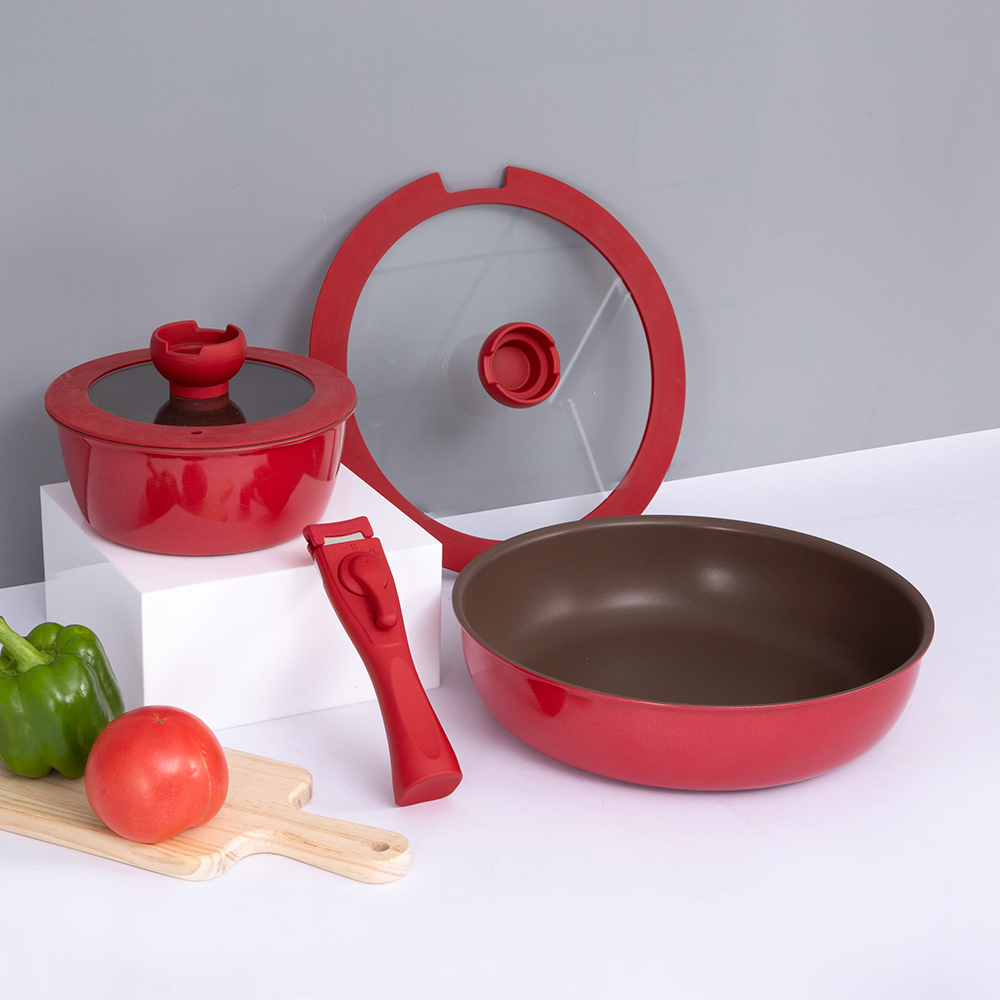
-3.jpg "24X5CM black medicinal stone coating Aluminum frying pan with glass lid DB-2405H")
-5.jpg "28X5.5CM black medicinal stone coating Aluminum frying pan with glass lid DB-2855H")
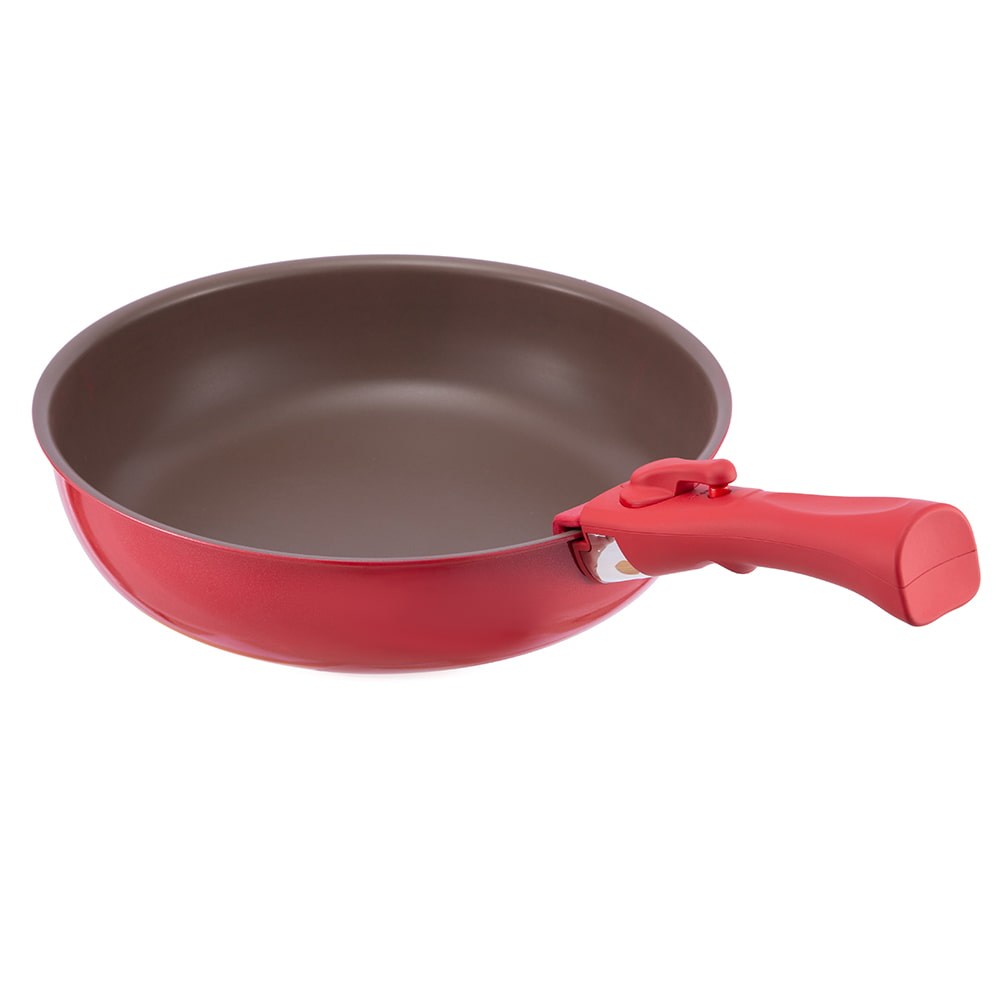
-3.jpg "24X5CM white medicinal stone coating Aluminum frying pan with glass lid DB-2405B")
-9.jpg "20X4.3cm Olive Green Food Safety Coated Stainless Steel 304 Frying Pan JY-2043L")
-3.jpg "20*4.3CM Single long handle uncovered coated frying pan JY-2043NP")
-14.jpg "24X4.5cm Olive Green Food Safety Coated Stainless Steel 304 Frying Pan JY-2445L")