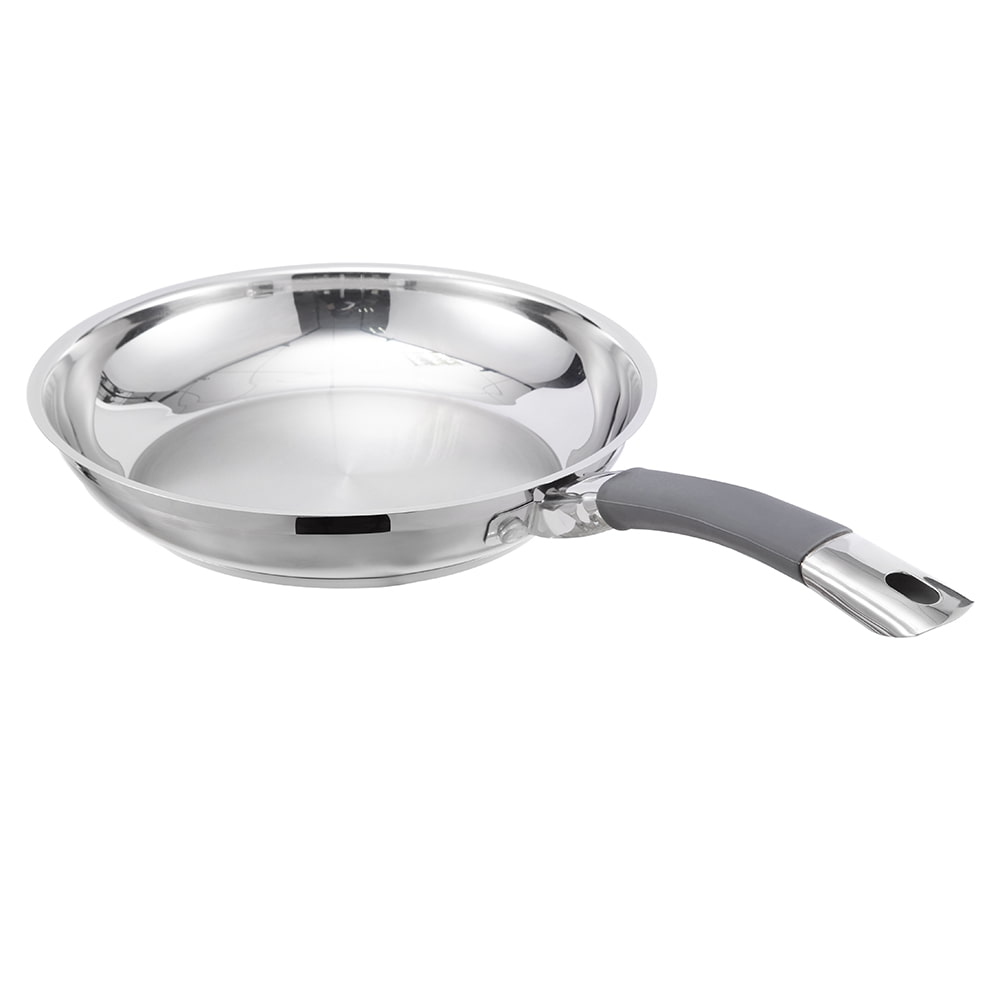
When you see the term "hard anodized" on a frying pan, it refers to a specific electrochemical surface treatment applied to aluminum. The process is called hard anodizing, and it fundamentally changes the outermost layer of the metal — not by coating it with a foreign material, but by converting the aluminum itself into a much denser, harder compound: aluminum oxide (Al2O3), also known as alumina.
In standard anodizing, the oxide layer formed is relatively thin — typically around 5 to 10 microns. Hard anodizing, by contrast, produces a layer that is 25 to 150 microns thick, depending on the duration and conditions of the process. This thickness is what gives the pan its signature properties: exceptional hardness, superior corrosion resistance, and a surface that is chemically non-reactive with food.
The base material remains aluminum, which means the pan retains aluminum's best qualities — lightweight construction and excellent thermal conductivity — while the surface itself performs more like industrial ceramic or hard chrome in terms of durability. This combination is what makes hard anodized frying pans a compelling choice across both household kitchens and commercial food service environments.
Understanding the manufacturing process helps clarify why hard anodized cookware behaves differently from other surface-treated pans. The procedure is precise and controlled, typically carried out in a temperature-regulated electrolytic bath.
The low temperature is critical. It prevents the oxide layer from dissolving back into the acid as fast as it forms, which is what allows the significantly greater thickness to accumulate. This is the key technical distinction between standard anodizing and hard anodizing — a difference that translates directly into cookware performance.
One of the most cited properties of hard anodized cookware is hardness, and the numbers are genuinely impressive when placed in context.
| Material | Vickers Hardness (HV) | Relative Hardness Note |
| Raw Aluminum | 15 – 40 HV | Very soft metal |
| Stainless Steel (304) | 150 – 200 HV | Common cookware metal |
| Standard Anodized Aluminum | 200 – 300 HV | Moderate surface hardness |
| Hard Anodized Aluminum | 400 – 600 HV | Harder than most tool steels |
| Sapphire / Corundum | 2000+ HV | Reference gemstone hardness |
Hard anodized aluminum achieves a surface hardness that exceeds many grades of steel, which is why it resists scratches, abrasion, and impact so effectively. The surface can withstand normal cooking utensil contact without degrading in the way that softer coatings do. However, metal utensils with sharp edges or points can still penetrate the oxide layer if force is applied, which is why most manufacturers recommend non-metal tools as a precaution — not because the surface is fragile, but to extend its functional life.
Many buyers conflate "hard anodized" with "non-stick" because they often appear together in product descriptions. In reality, these are two separate characteristics. Hard anodizing is a base surface treatment; non-stick behavior typically comes from an additional coating applied on top of it.
When a hard anodized pan includes a non-stick coating, the anodized layer acts as a superior bonding substrate. The microscopic porosity of the oxide surface gives the coating something to grip, resulting in far better adhesion than applying non-stick coatings directly to raw or polished aluminum. This is why hard anodized non-stick pans tend to show longer coating life compared to pans made from non-treated aluminum.
A pan sold as "hard anodized" without any coating description typically has a bare anodized surface. It is durable, easy to clean, and chemical-resistant — but it does not offer the effortless food release of a dedicated non-stick coating. Food behavior will be more similar to stainless steel: good sear, but requiring adequate fat and proper heat management.
Aluminum is one of the best heat-conducting metals available for cookware. It distributes heat approximately 4 times faster than stainless steel and roughly 13 times faster than cast iron. Hard anodizing preserves this thermal advantage because the conversion layer remains integral to the aluminum body — it does not act as an insulating barrier the way some external coatings can.
The practical outcomes for cooking are meaningful:
The dark grey-to-black color of hard anodized surfaces also has a minor radiative benefit: darker surfaces absorb and emit heat slightly more efficiently than polished silver surfaces, contributing marginally to cooking performance when using radiant or overhead heat sources like broilers.
Hard anodized pans are generally oven-safe to around 200°C to 260°C (400°F to 500°F), depending on the handle materials and any non-stick coatings present. The bare anodized aluminum body itself can withstand much higher temperatures, but the limiting factor is usually the handle material (silicone, phenolic resin, or stainless steel) and the non-stick coating's rated temperature ceiling. Always check manufacturer specifications for each product's specific temperature rating.
Raw aluminum reacts readily with acidic and alkaline foods. Tomatoes, citrus juice, vinegar, and dairy can all cause raw aluminum to leach trace metal ions into food — altering flavor and, over time, degrading the pan's surface. Hard anodizing addresses this problem at a fundamental level.
The aluminum oxide layer formed during hard anodizing is chemically inert under typical cooking conditions. It does not react with acids or bases in the pH range found in food preparation. This means you can cook tomato-based sauces, wine reductions, or lemon-dressed dishes in a hard anodized pan without concern for metallic off-flavors or surface damage from the food itself.
While hard anodized surfaces are highly resistant, certain conditions can compromise them over time:
One of the underappreciated advantages of hard anodized aluminum cookware is its weight profile. Because the base material is aluminum rather than cast iron or heavy stainless steel, a hard anodized frying pan typically weighs between 0.8 kg and 1.5 kg for a standard 28 cm (11-inch) size. This compares favorably to cast iron equivalents in the same size, which often exceed 3 kg.
This weight advantage matters in several practical scenarios:
Despite the lower weight, the surface durability of hard anodized cookware means it does not need the extra mass that cast iron relies on for longevity. The hardness comes from the material treatment rather than bulk.
Hard anodized cookware has a distinctive appearance that sets it apart from other cookware materials. The surface is uniformly dark grey to matte black, a natural result of the thick aluminum oxide layer rather than a paint or dye applied over the surface. This color is integrated into the material and does not fade, chip, or peel under normal use conditions.
The finish can vary slightly depending on the specific manufacturing parameters:
Unlike polished stainless steel, the matte surface does not show fingerprints, water spots, or minor surface marks prominently — a practical benefit for both retail display and daily kitchen use.
For buyers sourcing cookware at scale — whether for hospitality, retail distribution, or OEM manufacturing — hard anodized aluminum represents a technically strong and commercially practical category. Understanding the procurement-relevant dimensions of this product type helps inform sourcing decisions.
| Specification | What to Look For | Why It Matters |
| Oxide layer thickness | Minimum 25 microns for cookware grade | Directly determines hardness and durability |
| Aluminum alloy grade | 6000 or 3000 series preferred | Affects anodizing quality and base strength |
| Pan wall thickness | 3 mm to 5 mm for quality cookware | Affects heat evenness and warp resistance |
| Handle attachment method | Riveted preferred over welded for durability | Determines long-term structural integrity |
| Interior coating type | Confirm if bare anodized or with added non-stick | Affects maintenance and use-case suitability |
| Induction base | Magnetic steel disc bonded to base if required | Determines hob compatibility |
Hard anodized cookware is a well-established manufacturing category with a mature supply chain, particularly in China, South Korea, and Taiwan. For B2B buyers, this translates into competitive pricing at volume, flexible MOQ structures for established factories, and a high degree of customization potential in terms of:
Buyers interested in sourcing hard anodized cookware at scale should request product samples for layer thickness verification using cross-section microscopy or independent hardness testing before committing to bulk orders. Reputable manufacturers will provide material certifications and process documentation on request.
Hard anodized cookware requires straightforward but consistent care to maintain its surface integrity and performance over time. The rules are not complicated, but they differ slightly from stainless steel care in a few important areas.
With proper care, a well-manufactured hard anodized frying pan can maintain its functional surface for 5 to 10 years or more in regular domestic use. In professional kitchen settings with intensive daily use, the service interval is naturally shorter but still competitive compared to conventional coated cookware.
Several persistent misunderstandings circulate about hard anodized cookware, particularly around safety and performance. Addressing these directly helps buyers make more informed decisions.
This concern is based on knowledge about raw aluminum's reactivity. Hard anodized surfaces do not leach aluminum under normal cooking conditions. The aluminum oxide layer is chemically stable and functions as a barrier between the raw aluminum body and food. Studies on anodized aluminum cookware consistently show that food cooked in hard anodized pans does not show elevated aluminum content.
As discussed earlier, hard anodizing is a surface treatment, not a coating. A bare hard anodized surface has low porosity and is less prone to sticking than raw aluminum, but it does not provide the frictionless release of a dedicated PTFE or ceramic non-stick coating. The term describes the hardening process, not a food-release characteristic.
The surface is exceptionally durable, but it is not indestructible. Extreme mechanical abrasion, improper cleaning, and dishwasher exposure will gradually degrade the oxide layer. Durability is relative — compared to soft non-stick coatings, hard anodized surfaces last significantly longer, but they do have a practical service life that depends heavily on how well they are maintained.
Some pans achieve a dark appearance through painted or lacquered exteriors, dark-tinted non-stick coatings, or other surface treatments. The characteristic dark matte of hard anodizing is on the aluminum body itself, not a layer applied over it. A pan should explicitly state "hard anodized" in its materials description — exterior color alone is not a reliable indicator.
For buyers evaluating hard anodized cookware against other options, the following comparison outlines the primary performance trade-offs across the most common cookware categories.
| Property | Hard Anodized Aluminum | Stainless Steel | Cast Iron | Standard Non-Stick |
| Weight | Light | Medium | Very heavy | Light |
| Heat conductivity | Excellent | Moderate | Slow but retentive | Excellent |
| Surface durability | Very high | High | Very high | Low to moderate |
| Food release (bare) | Moderate | Low | Moderate (seasoned) | Excellent |
| Reactivity with acidic food | None (anodized) | Minimal | Moderate | None (coated) |
| Dishwasher safe | Not recommended | Generally yes | No | Limited |
| Induction compatible | With magnetic base | Most grades, yes | Yes | Depends on base |
The hard anodized category occupies a strong middle ground: more durable than standard non-stick, lighter and more thermally efficient than cast iron, and chemically more stable than raw stainless steel without an additional reactive metal handling layer. This versatility makes it well-suited for both consumer and professional applications.
Whether sourcing for retail, hospitality, or OEM purposes, evaluating hard anodized cookware against specific product criteria reduces procurement risk and improves end-user satisfaction.
Pan body thickness is one of the most important functional variables. Thicker walls and bases distribute heat more evenly and resist warping under high heat. For quality hard anodized frying pans, look for:
Pans below 2.5 mm in base thickness will show hot spots and are more prone to warping, especially on glass-ceramic cooktops.
Handle construction affects both safety and longevity. Key considerations include:
Confirm whether the pan interior is bare hard anodized or has an additional non-stick coating. For buyers supplying both professional chefs (who may prefer bare surfaces for high-heat searing) and domestic end users (who prioritize easy cleaning), having both variants in your range addresses a wider market.
Yes. Hard anodized surfaces are chemically stable and do not react with food under normal cooking conditions. The aluminum oxide layer does not leach aluminum into food and is considered safe by food safety authorities in major markets.
Aluminum is not magnetically responsive, so hard anodized pans are not inherently induction-compatible. Induction capability requires a bonded magnetic stainless steel base. Always check the product specification — many hard anodized pans are manufactured with this base included.
The product should explicitly state "hard anodized" in its materials description. A genuine hard anodized surface will have a consistent matte dark grey or near-black finish that is integral to the aluminum, not painted on. Requesting supplier documentation, including surface hardness test data, is the most reliable verification method for B2B buyers.
Standard anodizing produces a thinner oxide layer (around 5 to 10 microns) at higher bath temperatures. Hard anodizing uses a colder bath and longer process time to build a much thicker layer (25 to 150 microns), resulting in significantly greater hardness, wear resistance, and durability. Both processes convert the aluminum surface into aluminum oxide, but hard anodizing produces a fundamentally superior result for cookware applications.
Dishwashers use hot water, steam, and strongly alkaline detergents. This combination gradually degrades the aluminum oxide layer, causing the surface to dull, discolor, or become pitted. Hand washing with mild soap is recommended to preserve the surface and extend the pan's functional life.
No. Hard anodized surfaces do not require seasoning. The surface is stable as-is and does not benefit from the oil polymerization process used to season cast iron. If the pan includes an additional non-stick coating, that coating arrives ready to use — no seasoning step is needed.
The most common options include PTFE-based coatings (applied in single or multiple layers for varying durability), ceramic coatings, and hybrid formulations. Each has different heat tolerance, scratch resistance, and maintenance requirements. Buyers sourcing at scale should specify which coating system best matches their target end user.
With proper care, a quality hard anodized pan can last 5 to 10 years or more in domestic use. In high-volume commercial settings, expect a shorter service life but still longer than standard coated aluminum cookware under equivalent conditions.
 No. 1, Jingwei Road, Yangcheng Lake Town, Xiangcheng District, Suzhou City, China
 [email protected]
  +86-13913553688
Copyright © Suzhou Jiayi Stainless Steel Products Co., Ltd.
 Privacy
Wholesale Aluminum/ Stainless Steel Pan and Pot Manufacturers
Privacy
Wholesale Aluminum/ Stainless Steel Pan and Pot Manufacturers

 search
 中文简体
中文简体 English
 русский
 Français
 Español
 日本語
日本語
-4.jpg "20X4.5CM white medicinal stone coating Aluminum frying pan DB-2045B")
-1.jpg "20X4.5CM black medicinal stone coating Aluminum frying pan DB-2045H")
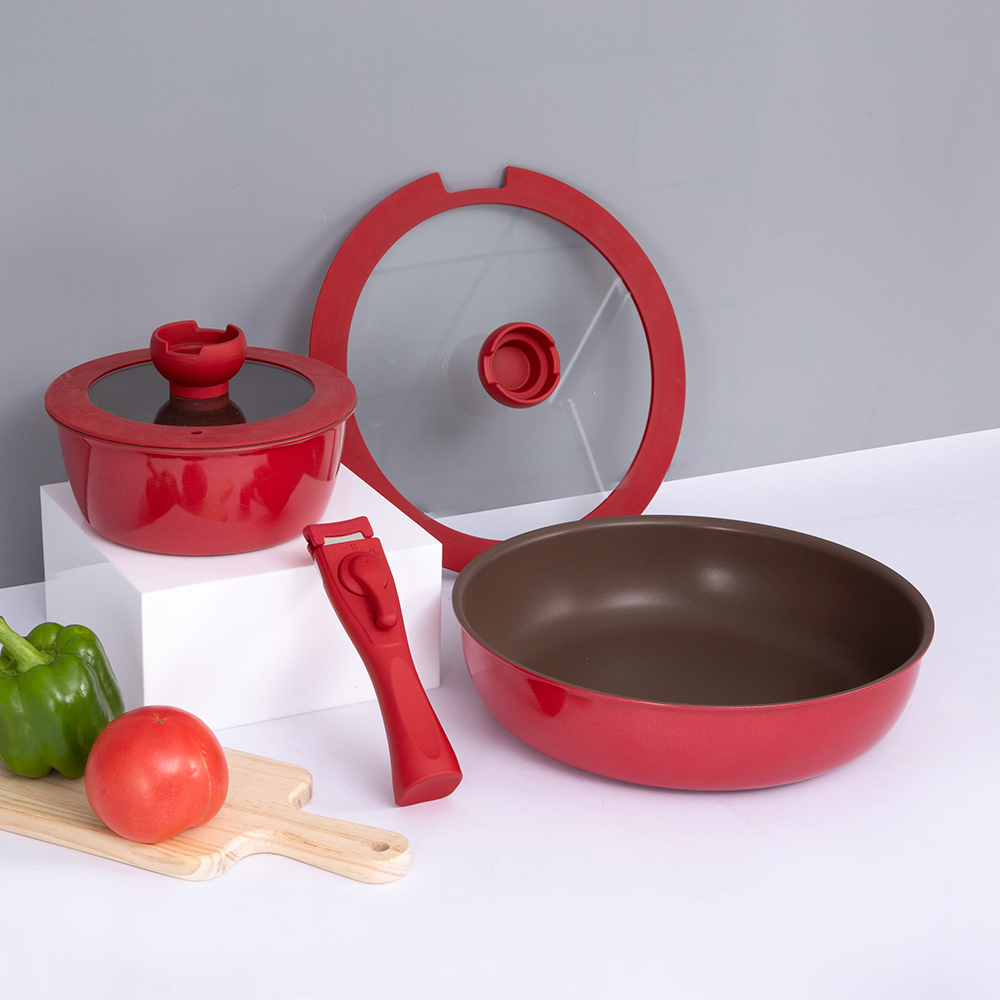
-3.jpg "24X5CM black medicinal stone coating Aluminum frying pan with glass lid DB-2405H")
-5.jpg "28X5.5CM black medicinal stone coating Aluminum frying pan with glass lid DB-2855H")
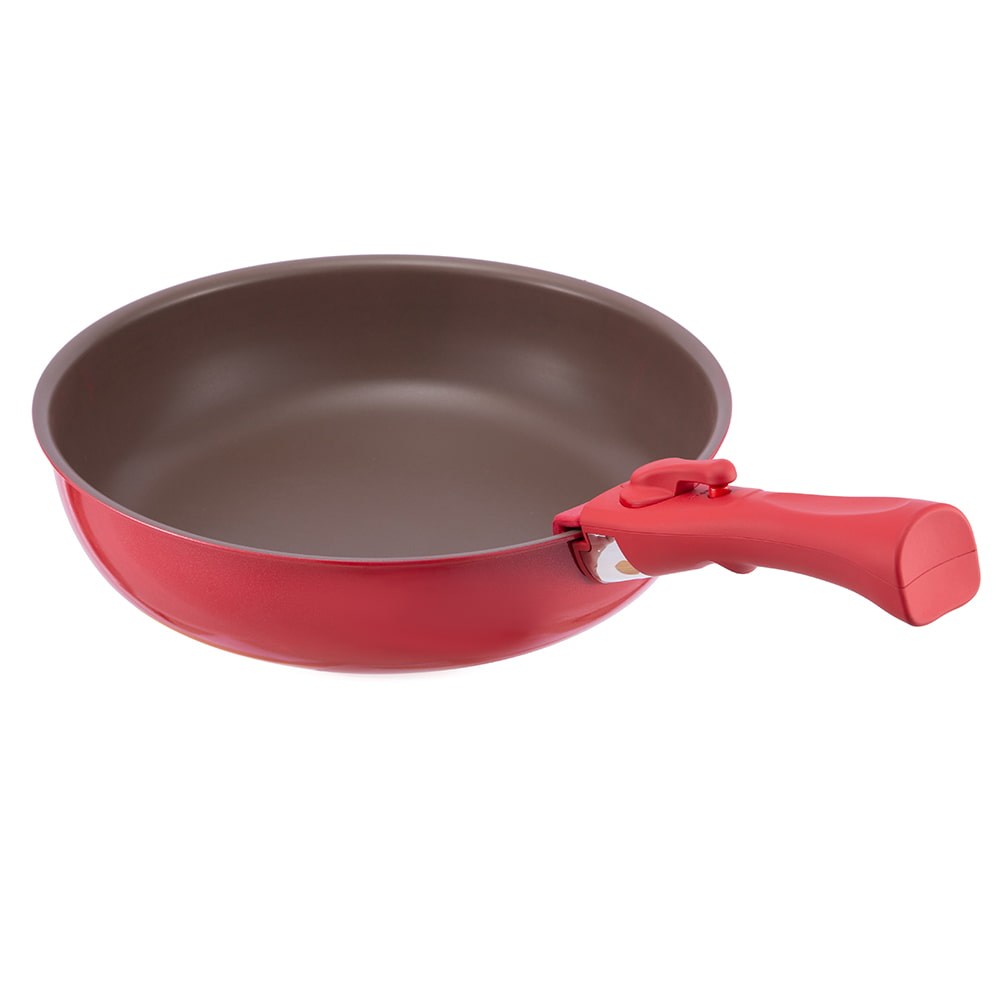
-3.jpg "24X5CM white medicinal stone coating Aluminum frying pan with glass lid DB-2405B")
-9.jpg "20X4.3cm Olive Green Food Safety Coated Stainless Steel 304 Frying Pan JY-2043L")
-3.jpg "20*4.3CM Single long handle uncovered coated frying pan JY-2043NP")
-14.jpg "24X4.5cm Olive Green Food Safety Coated Stainless Steel 304 Frying Pan JY-2445L")